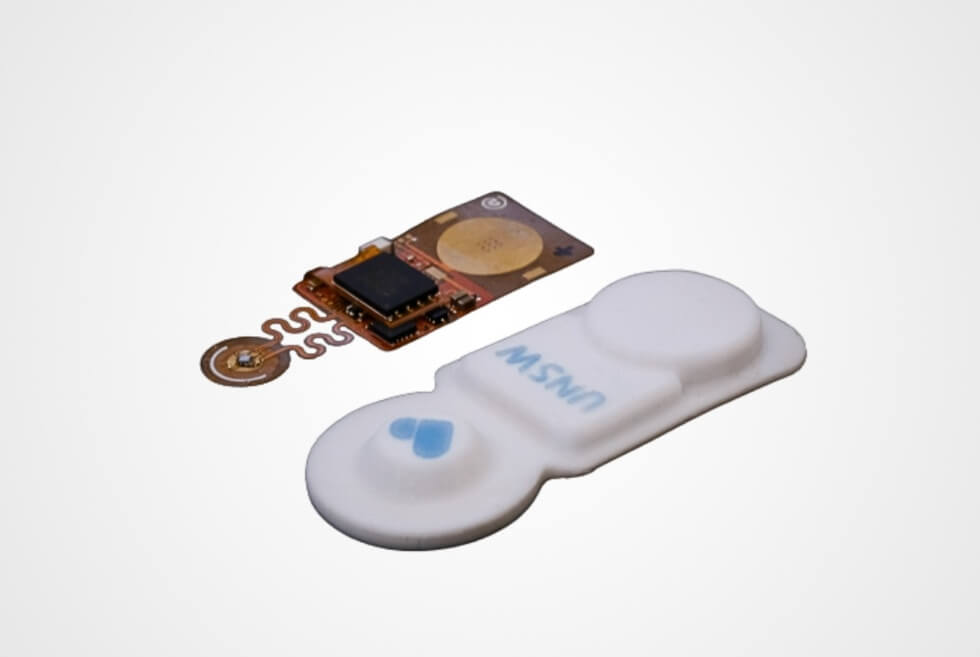
The University of New South Wales (UNSW) has developed a wearable digital stethoscope that continuously monitors heart and lung activity. Called the AusculPatch, it offers a potential new tool in remote patient monitoring and in early detection of severe problems for those with heart and breathing issues.
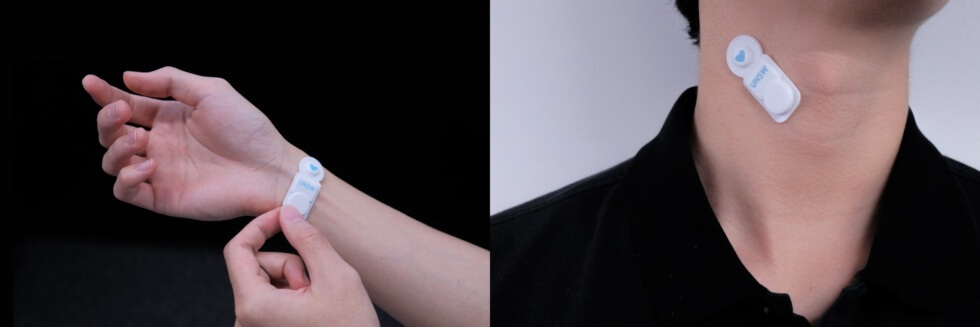
It’s a compact, lightweight, and flexible sensor patch measuring approximately 20 x 47 x 3 mm and weighing 3.2 grams. It attaches to the chest or over peripheral arteries using medical adhesives. At its core is an ultra-thin silicon sensing element that detects mechanical vibrations travelling through the skin from the heart, lungs, and blood vessels.
AusculPatch detects even extremely low-frequency vibrations that are difficult to measure with existing wearable technologies. Evaluated via proof-of-concept studies published in Nature Communications, the research showed the patch continued to detect clear heart sounds even in noisy environments, such as conversations and simulated background noise.
“The heart sound propagates through the body fluid and tissue, generates an acoustic pressure that vibrates the sensing element,” shared Tran Bach Dang, a PhD candidate in UNSW’s School of Mechanical and Manufacturing Engineering. “What the patch is doing is picking up that vibration.”
Meanwhile, to prevent noise interference, the team built directional shielding into the sensor. “The sensor element is designed to shield the sound coming from one direction, typically from the human body. In that way, it is less susceptible to ambient sound,” Dang added.
Moreover, AusculPatch continuously recorded cardiorespiratory data even while the test subjects were climbing stairs, working, walking, and eating. The patch records a much wider range of physiological signals, including subtle valve activity, breathing patterns, and respiratory rate. Additionally, it detects pulse waves, blood flow vibrations, and blood pressure indicators.
Learn More Here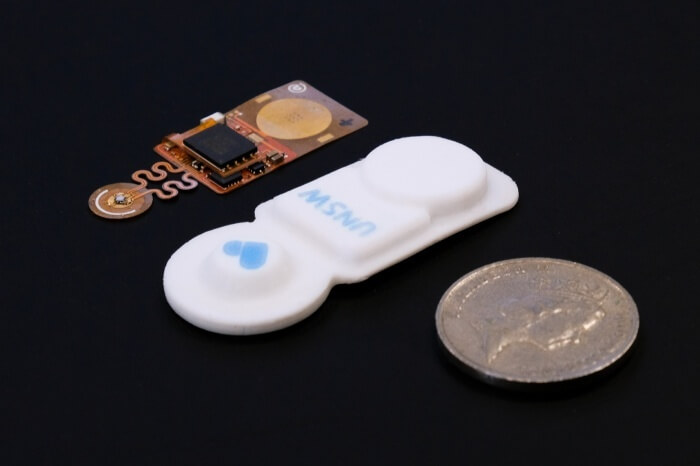
Images courtesy of UNSW