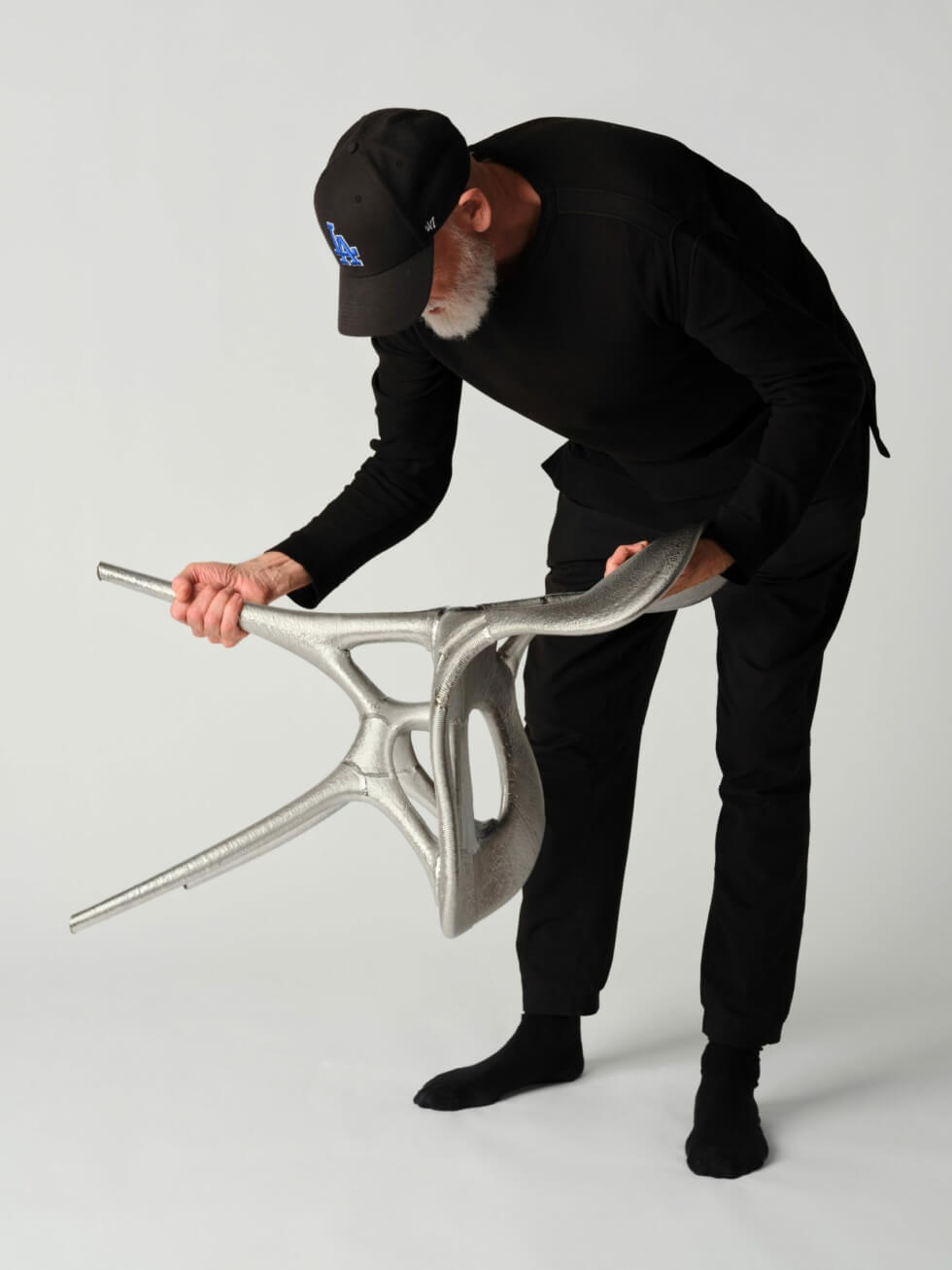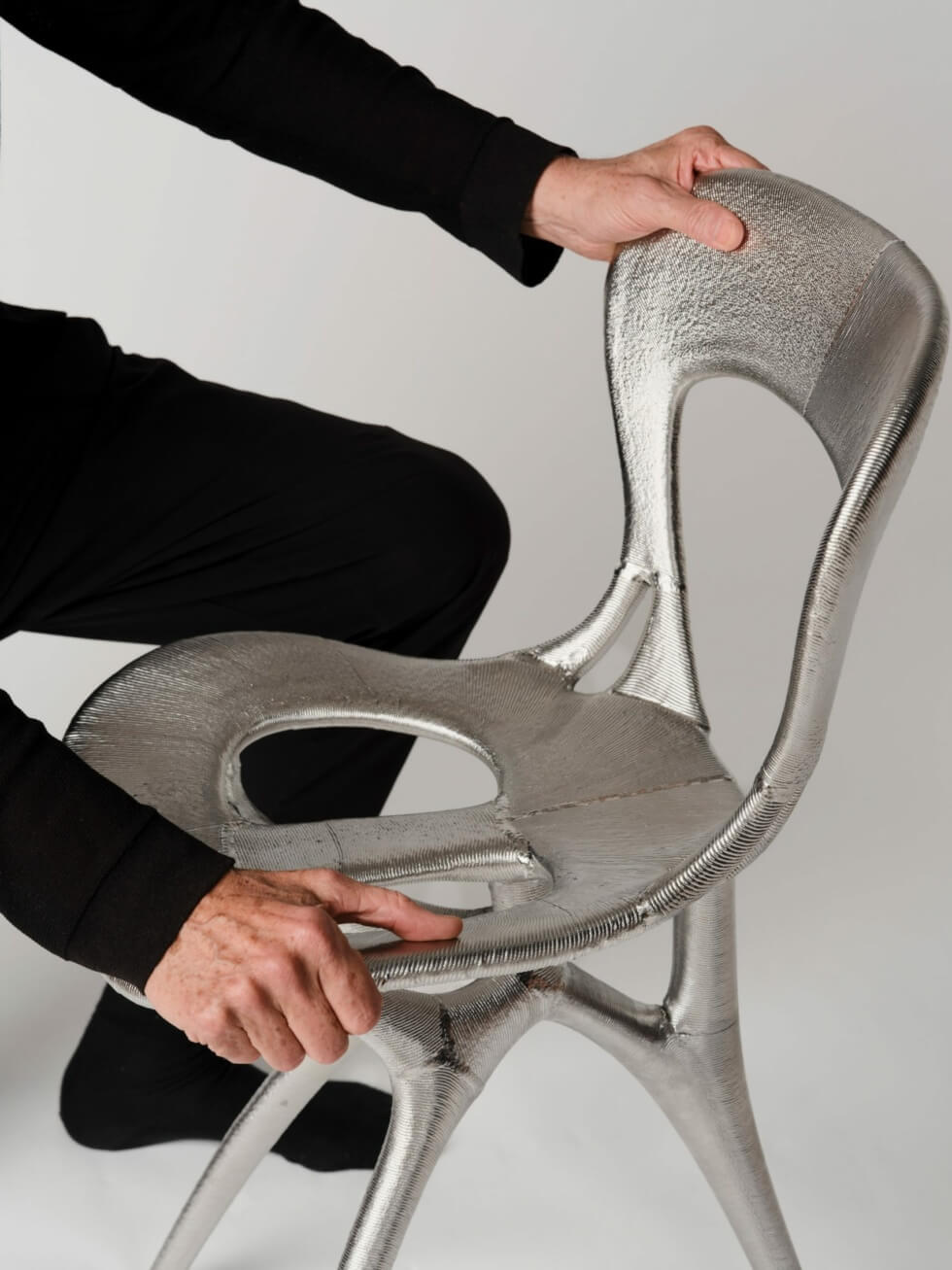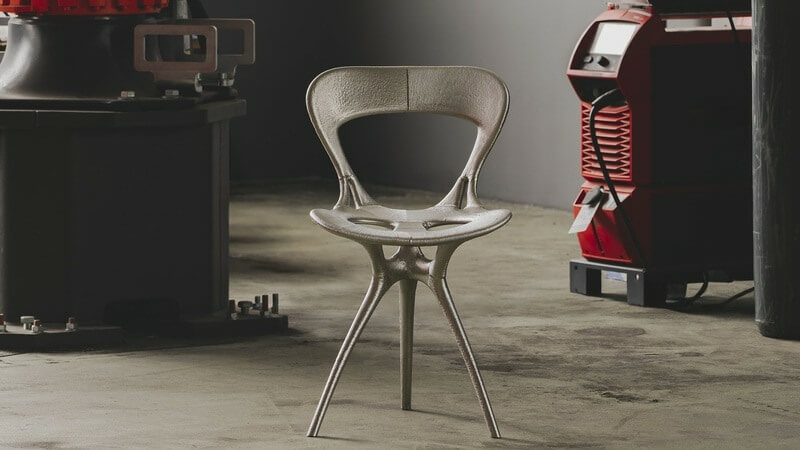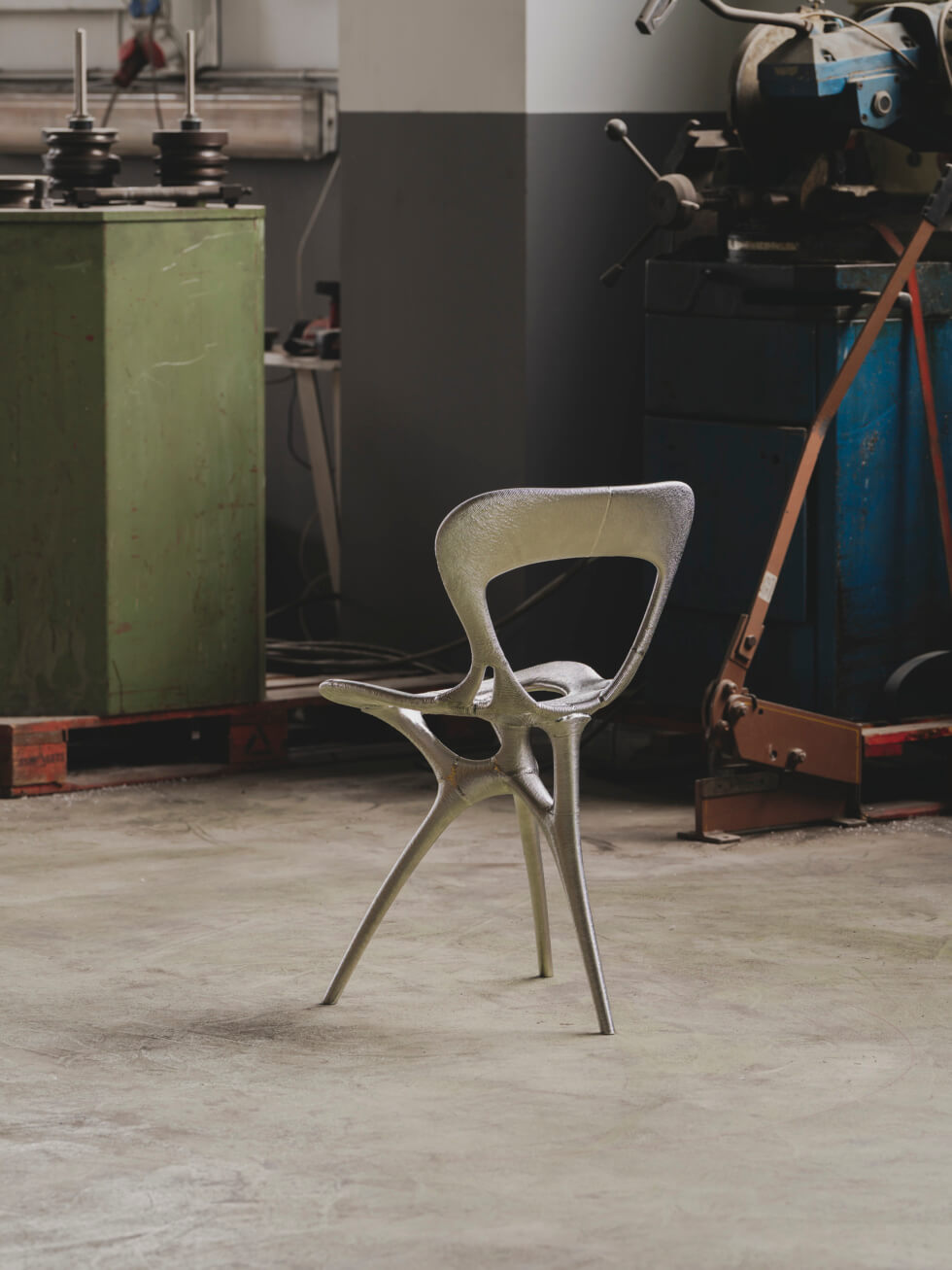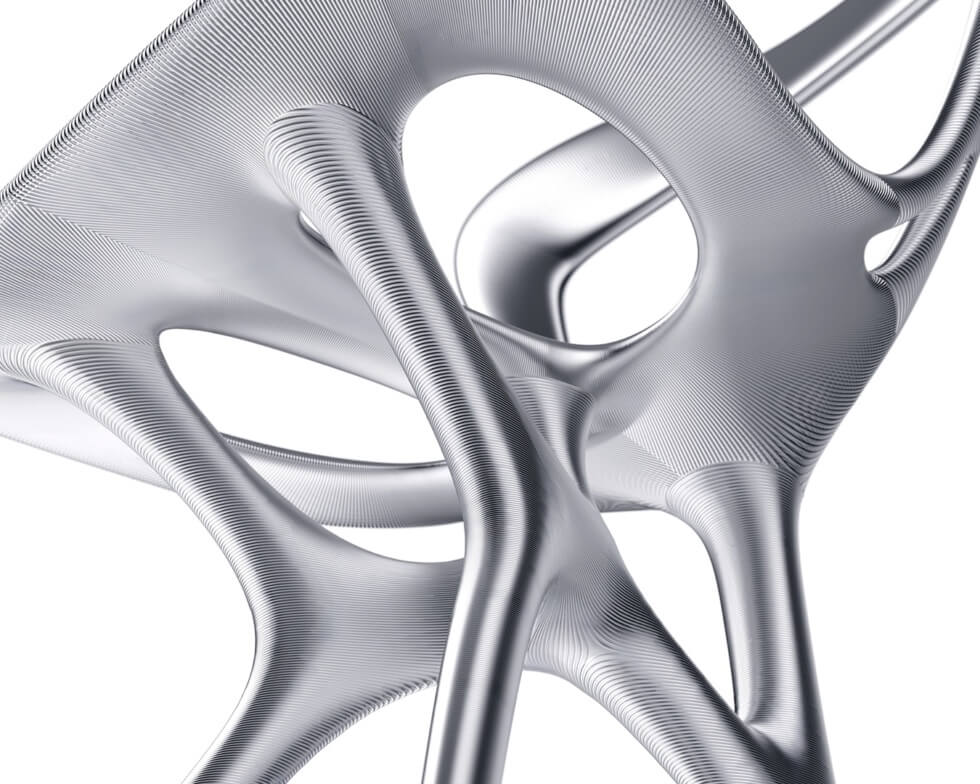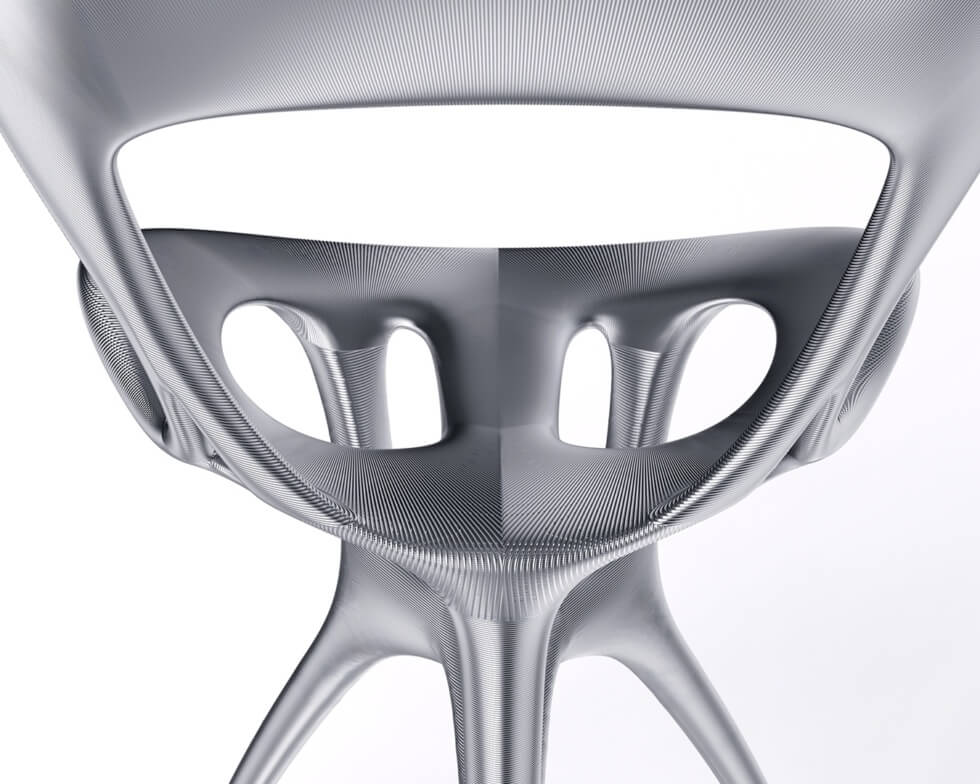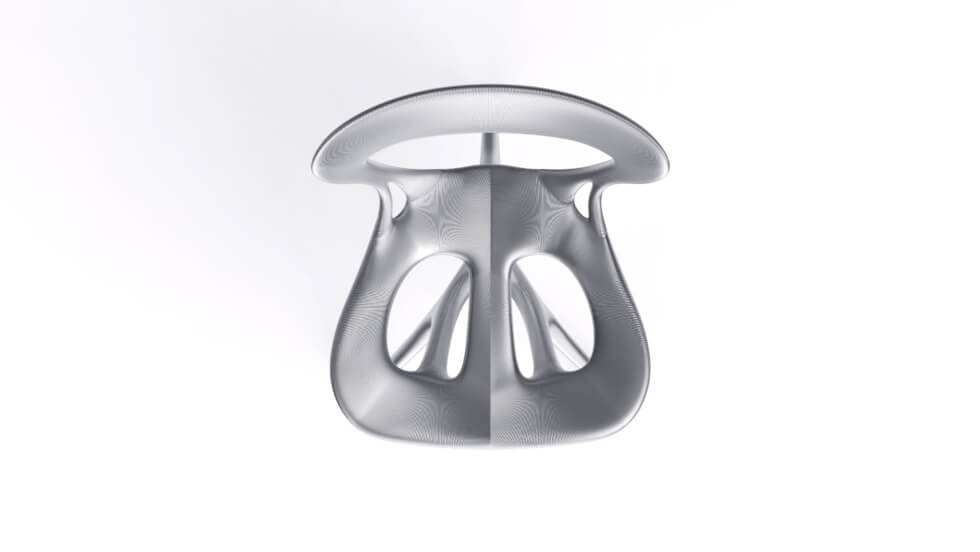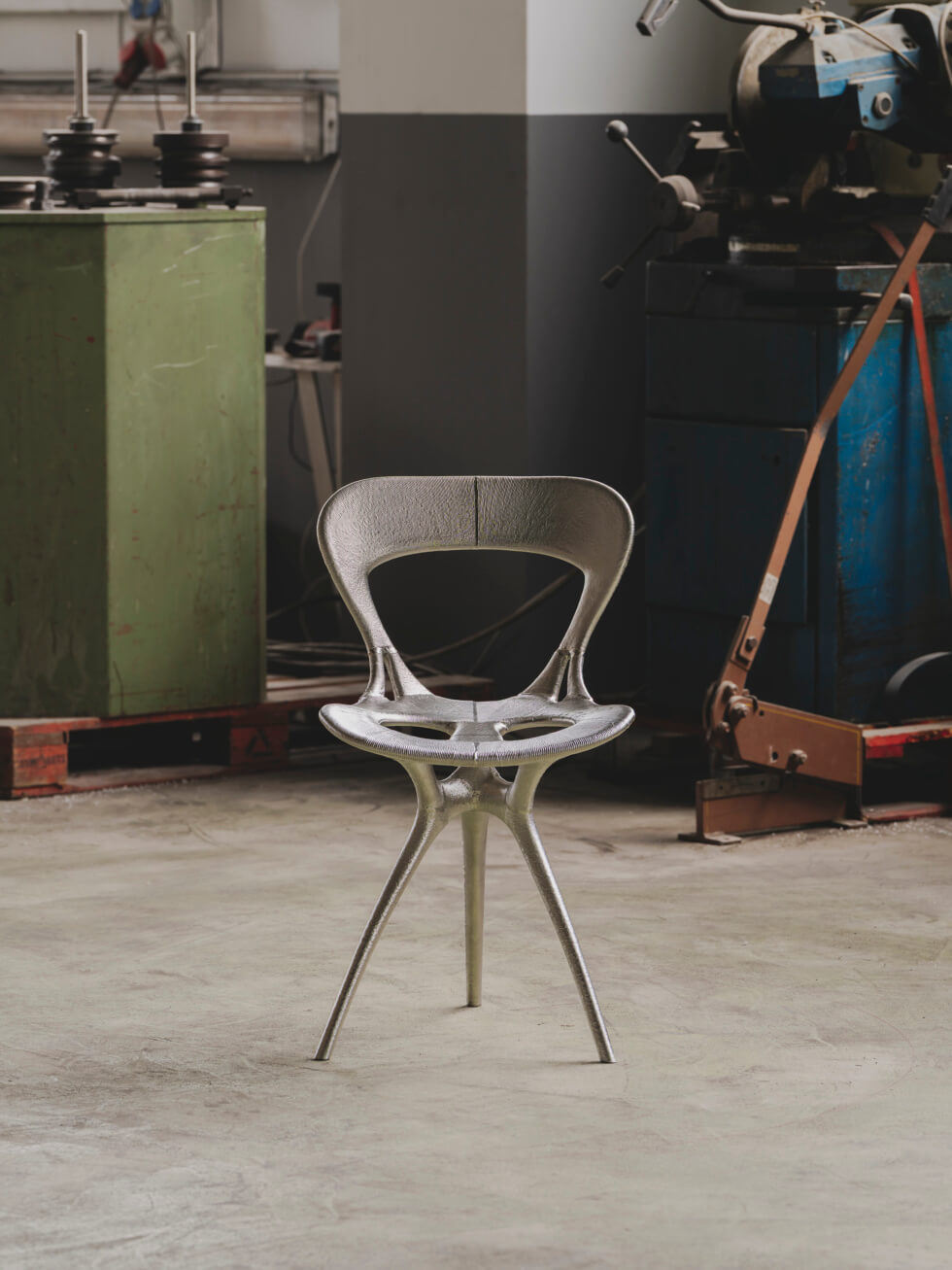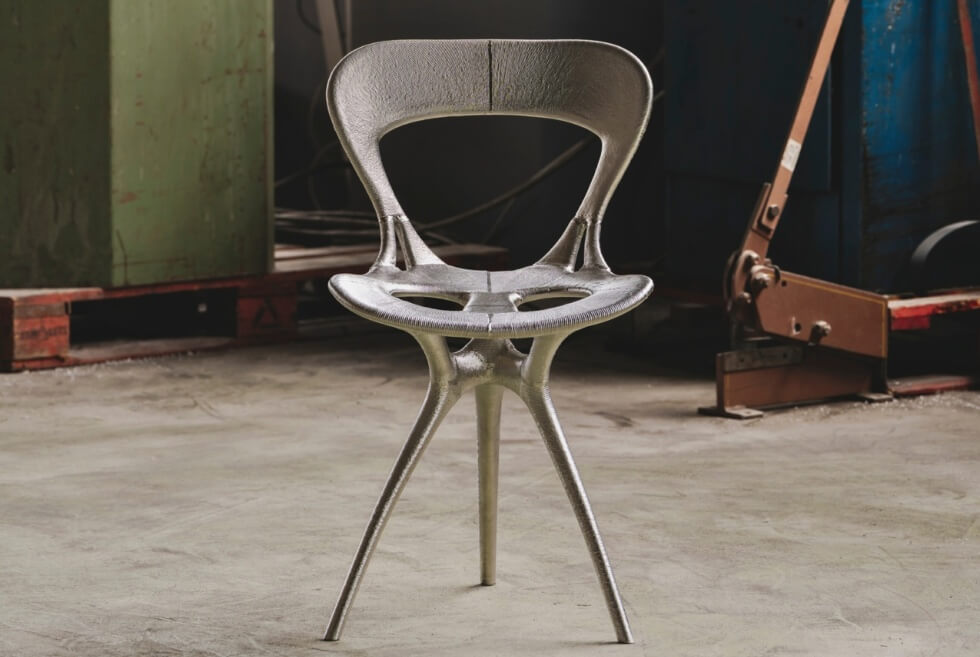
Designer Ross Lovegrove teamed up with Google’s AI development company on a chair design that showcases his signature biomorphic sillhouete. The process involved generating hundreds of iterations based on his sketches using generative AI, with Seed 6143 the chosen design.
Lovegrove, his studio’s creative director Ila Colombo, design practice Modem, and Google DeepMind used Google’s Gemini virtual AI assistant to visualise the iteration. They then transformed it into a 3D sillhouette and run it into a CAD model, which served as reference for all downstream fabrication steps.
The team then sliced the model for Seed 6143 and subdivided it for direct robotic-arm 3D printing in metal. This process ensures the smallest number of connecting parts to achieve a continuous flow, inherent of Lovegrove’s signature sinuous style.
The result features continuous curves and organic transitions between the chair’s parts. It boasts a fururistic silhouette that blends fluidity and structural integrity. But it took mental efforts to achieve the specific design.
The team first had to curate a dataset of Lovegrove’s personal sketches to fine-tune Google DeepMind’s latest text-to-image technology Imagen. They applied the low-rank adaptation (LoRA) process to adjust large pre-trained AI models for specific tasks.
They then used experimental prompts that avoided conventional labels like “chair” to develop a richer exploration of form and semantics. “For example, we couldn’t use parametric language. We couldn’t use the language used in the studio to describe Ross’s practice,” Colombo told Dezeen.
“You name it, organic essentialism, parametric, dematerialised – all of the words we would normally use to describe his (Lovegrove) work were not understood.” The team eventually ended up using descriptive phrases like “seamless single surface extension and biomorphic form” that rendered Seed 6143.
Check It Out