The classic RV power compromise of enduring the aggressive rattle of a gas generator just to brew coffee or resigning yourself to total darkness is officially dead. Today’s portable power stations have completely rewired how we approach comfort, backup energy, and absolute freedom on the road. They offer a refined, emission-free way to keep the essentials humming: charged phones, glowing laptops, cold portable fridges, running CPAP machines, and active cameras, all without turning your serene campsite into a mechanic’s yard.
But don’t just throw money at the heaviest battery on the shelf. Serious off-grid travel requires a strategy. You have to be completely in control of your energy hunger, knowing exactly what you do, how long you last beyond the pavement, how often you turn on, and which electronics are really important when the concrete is gone. A robust power plant is not a fad. When properly adjusted, it becomes the silent pulse of your setup, enabling you to work, eat, relax, and travel without disturbing the untamed tranquility you seek.
Off-Grid Camping Is Really A Power Management Challenge
The hard lesson that every novice boondocker learns is that power fades far more quickly than you may imagine. It may seem like a little lineup: one smartphone, a laptop, LED string lights, a roof fan, a 12V refrigerator, and a coffee machine. However, when you combine them, you create a challenging daily energy burn. The fatal flaw is counting outlets rather than calculating watt-hours. That 60W laptop grinding for five hours? It just ate 300Wh. Your portable fridge cycles on and off all afternoon in the heat. Toss in drone batteries, a Wi-Fi dish, and evening illumination, and your casual weekend suddenly mirrors the demands of a mobile tech startup.
This is exactly where a power station proves its worth. Unlike its gas-guzzling ancestors, it demands no fuel, no oil changes, no frantic pull-cords, and zero apologies to your campsite neighbors. The ultimate RV power rig is almost invisible. It sits quietly, handling the heavy lifting so you can focus on the trail. The real trick is sizing it ruthlessly. An overnight strike mission might just need a compact brick. But stretch that to a five-day desert stint, and robust capacity paired with solar input transitions from a luxury to a lifeline.
Why Serious RV Campers Are Moving Beyond Gas Generators
Gas generators are still useful, especially for long-term brute-force loads. However, there is no denying their baggage: the loud drone, poisonous exhaust, volatile fuel storage, disorganized upkeep, stringent camping prohibitions, and the underlying guilt of ruining the quiet that everyone had gone great distances to experience. These points of friction are eliminated by a battery-powered power plant. It delivers clean, silent, emission-free energy that you can keep safely inside the rig, effortlessly sidestepping quiet-hour curfews.
Practically speaking, this is a game-changer when the sun goes down. A traveler relying on a CPAP machine, a roof fan, a phone charger, and a reading light doesn’t want an engine roaring just outside their window. They need silent, stored dependability. In these moments, a portable power station for camping transcends convenience and becomes an instrument of absolute confidence. It anchors the small, critical systems that keep a journey safe.
Picture a couple navigating the backcountry in a Class B van. Their demands are lean: a compressor fridge, two phones, mirrorless cameras, a laptop, ambient lights, and a quick boil on an induction kettle. Armed with a mid-to-large power station and a rooftop solar panel, they effectively sever their reliance on gas. They might skip running the RV air conditioner all night, but their core camp experience remains seamless, silent, and fully connected.
The Specs That Actually Matter On The Road
Off-grid travelers just need to monitor five key metrics: capacity, output, charging speed, battery chemistry, and port arsenal. Spec sheets can cause instant tiredness. Watt-hours may be thought of as your digital fuel tank’s actual volume. In the meantime, raw wattage determines the precise number of devices that can operate at once, much like engine muscle. Laptops, floodlights, drones, and camp coolers can all be powered by a 1,000Wh beast with ease. However, when a large space heater is connected to the system, it chokes right away.
Sensitive contemporary electronics demand clean, reliable power; thus, a pure sine wave AC inverter is essential. You want a regulated 12V socket to keep your overlanding refrigerator running smoothly and high-speed USB-C connectors for contemporary laptops. Multiple AC outlets prevent family fistfights over the charger. Rapid wall-charging gets you out of the driveway faster, while high-efficiency solar inputs keep you alive when you’re parked miles from the nearest hookup.
Then there’s the gold standard: LiFePO4 (lithium iron phosphate) battery chemistry. Famed for its monumental cycle life and rugged durability, it is purpose-built for RVers who are constantly on the move. If this station is going to rattle down dirt roads, brave temperature swings, and pull double-duty as your home emergency backup, longevity isn’t just a perk. It is the core of the investment.
Real-World Use Cases: From Weekend Comfort To Emergency Backup
A portable station’s unwavering adaptability is its real superpower. When you arrive at camp on a Friday night, it keeps the GPS tablets charged for the walk the following day, the refrigerator cold, and the Bluetooth speaker pounding. When you switch to digital-nomad mode, it can easily run a Wi-Fi hotspot and remote workstation from the quietest area of your setup. It immediately switches to emergency life-support, operating medical equipment, weather radios, and emergency lights when a freak storm disrupts the grid.
Imagine a family boondocking for three days without shore power. Their biggest friction point isn’t surviving the wild; it’s device diplomacy. The kids demand charged tablets for the dusty drive. The parents need GPS, headlamps, phones, and a reliable coffee setup. The 12V fridge needs an unbroken lifeline. Without a central hub, you’re just rationing dwindling battery percentages. Drop a properly sized station into the mix, and chaos turns into control.
However, let’s be brutally honest about the boundaries. Your battery will be destroyed in a matter of minutes if you run an electric space heater, microwave, or rooftop air conditioner. Campers with experience know how to brutally remove the “nice-to-haves” from the “must-runs.” These power plants are excellent for silent backup, short appliance bursts, and efficient needs. They are not infinite magic boxes that defy physics. True off-grid freedom still demands disciplined energy habits.
How To Choose The Right Setup Without Overspending
Throwing down cash for the absolute largest unit feels secure, but it’s rarely the smartest play. Behemoth batteries bleed your budget, eat up precious cargo space, and add grueling weight to your rig. The tactical approach is drafting a strict power profile. Examine each gadget you want to use, determine its wattage, and multiply the result by the number of hours you expect to use it each day. Add inverter inefficiencies, frigid temps, deteriorating batteries, and unavoidable surprises to that figure. This straightforward logic shields you from two deadly mistakes: purchasing a big cinderblock that you never use to its full potential, or purchasing a weak unit that leaves you stuck in the dark.
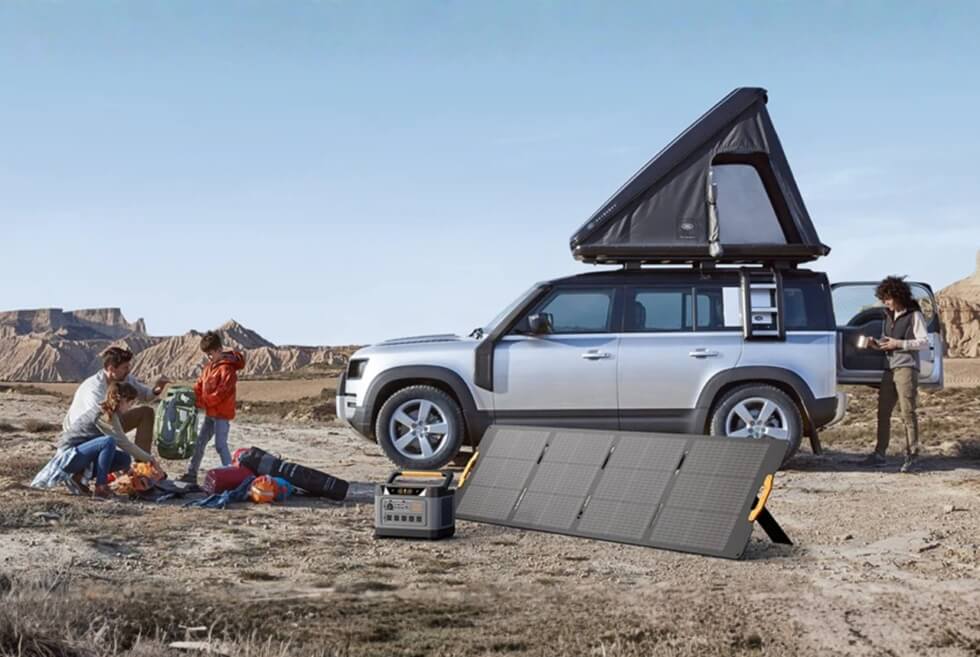
For weekend warriors, a compact-to-mid-tier unit easily juggles smartphones, string lights, roof fans, cameras, and basic tech. But if you’re a heavy traveler leaning on a 12V compressor fridge, a laptop, a CPAP, and an armada of family devices, you need to step up to high-capacity territory. For extended off-grid isolation, chaining that station to deployable solar panels is the ultimate hack. Solar might not refill a massive battery instantly, especially under heavy pines or incoming storms, but it drastically stretches your runway and cuts your umbilical cord to crowded RV parks.
A portable power station for camping must mirror your specific travel habits. If remote work is the goal, hunt for premium USB-C power delivery. If culinary comfort is key, scrutinize the 12V fridge runtimes. If you haul a big family, prioritize maximum outlet diversity. And if you seek out secluded, silent landscapes, whisper-quiet operation isn’t just a spec, it’s a mandatory quality-of-life feature.
The Best RV Power Is The Power You Can Trust Quietly
These days, portable power stations are more than just upgraded phone chargers. They are the secret to living a fluid, incredibly comfortable RV lifestyle that is delightfully free of concrete connections, gas cans, and mechanical noise. For serious overland travelers, this shifts the entire tempo of a journey. You can drop anchor miles away from the packed tourist sites, knock out remote work overlooking a canyon, run your crucial gear through the night, passively harvest solar power during the day, and maintain a bulletproof reserve for when the weather inevitably turns.
The sharpest nomads don’t treat electricity as a last-minute thought. They engineer their power grids with the same meticulous care they apply to their water reserves, fuel tanks, and route mapping. They intimately know their energy footprint and invest in a system that elevates their specific brand of travel. That mindset transforms a heavy battery from a shiny accessory into indispensable survival gear.
Bringing urban amenities into the outdoors at the expense of tranquility is not how boondocking will develop in the future. To preserve the integrity of the journey, it necessitates utilizing creativity. Equipped with a very durable portable power station, you may cut off the grid without ever losing sight, giving you the freedom to vanish into the outback while keeping essential equipment charged, safe, and ready for anything the path throws at you.