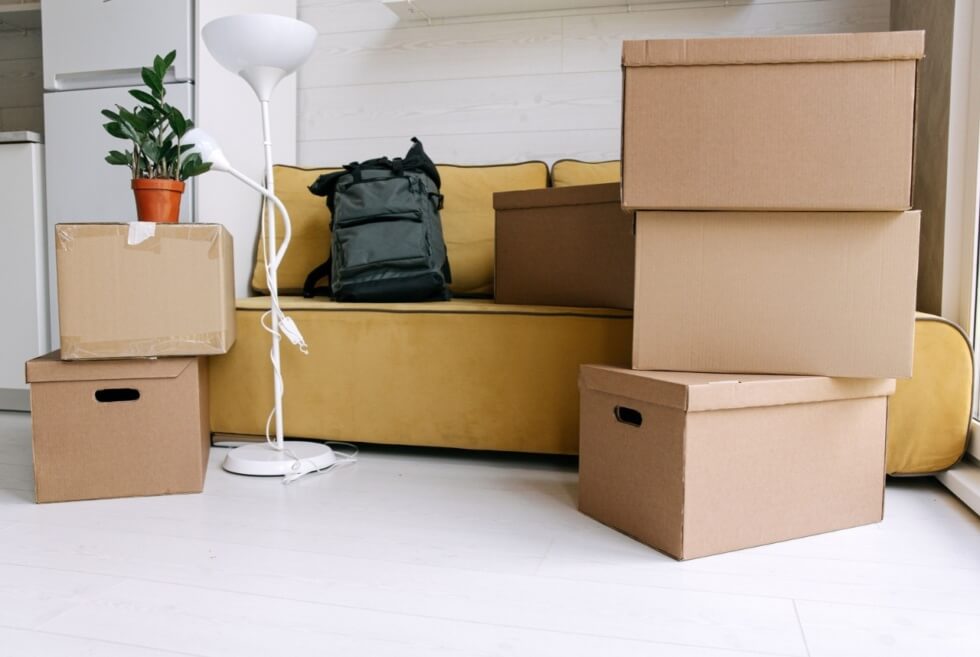
Most people pack the way they clean before guests arrive: grabbing whatever is closest, putting it in the nearest box, and promising to sort it out later. That works fine until the boxes are stacked to the ceiling in a new house and nobody can find a single plate.
The difference between a move that takes a weekend to unpack and one that drags on for months usually comes down to having a system, even a basic one, before the first box gets taped shut.
None of these ideas are complicated, and most of them take only a few minutes to set up, but they save hours on the other end.
Pack One Room at a Time
Jumping between rooms feels productive, but it leaves you with half-packed spaces all over the house and boxes full of mixed items.
Pick one room, finish it completely, then move on to the next. Start with the rooms you use least, so the guest room, the attic, the garage, and the out-of-season closet, and leave the kitchen, bathrooms, and bedrooms for the final few days.
Keeping every box to a single room also means the movers can put it in the right place at the new house, which saves you from carrying boxes up and down the stairs for a week.
Give Hardware Its Own Home
Beds, tables, shelves, and desks usually have to come apart before they can travel, and that’s where small parts start going missing.
When disassembling large items before your move, Mayflower advises placing all necessary screws, nuts, and bolts into a clearly labeled, sealable plastic bag and storing it securely inside a designated parts box. Write the name of the furniture on each bag, so the bed frame bag and the bookshelf bag never get confused.
Put the matching tools in the same box, including the hex keys that came with flat-pack furniture, and keep the whole parts box with you or mark it to be unloaded first. Taking a quick photo of each piece before you take it apart helps a lot when it’s time to put it back together.
Use a Labeling System Everyone Understands
Writing kitchen stuff on the side of a box is better than nothing, but it doesn’t help much when there are twenty of them.
Give each room a color, using colored tape or stickers, and put a matching piece of tape on the door frame of that room in the new house. The movers can then match boxes to rooms at a glance, even if they’ve never seen the floor plan.
Number every box, and keep a simple list on your phone of what’s inside each one. When you need the toaster on the first morning, you’ll know it’s in box 14 instead of opening every kitchen box to find it.
Pack an Open-First Box for Every Room
The first night in a new home is much easier when the basics are easy to find.
For each main room, pack one box with what you’ll need right away, so the kitchen box has a pan, a few plates, cutlery, dish soap, and coffee, the bathroom box has towels, toilet paper, and soap, and each bedroom box has sheets, pillows, and a change of clothes.
Mark these boxes clearly with a big star or a different color, and ask the crew to load them last so they come off the truck first.
Pack Heavy Items in Small Boxes
It’s tempting to fill a big box with books because it saves space, until somebody tries to lift it.
Put heavy things, such as books, tools, canned food, and dishes, into small boxes, and save the large boxes for light, bulky items, from pillows to lampshades and bedding. Try to keep each box at a weight one person can carry without straining, since that makes loading faster and protects your back as well as the boxes.
Fill any empty space with towels, clothing, or paper so nothing shifts during the drive, and tape the bottom of every box twice, because a box that gives way on the stairs is how most breakages happen.
Declutter Before You Pack
Every item you pack is something you’ll have to carry, move and unpack again, so it pays to be honest about what’s worth bringing.
Set up three areas as you go, one for donating, one for selling and one for throwing away, and decide on each item before it goes into a box. Clothes that haven’t been worn in a year, duplicate kitchen gadgets, and furniture that won’t suit the new layout are good places to start.
The fewer things you move, the cheaper and quicker the move tends to be, and the new home starts out feeling far less cluttered than the old one did when you left it.