Men’s elegance is not based solely on the quality of a garment. It depends above all on how an outfit fits within a given context. An impeccable cut or a premium fabric is not enough if the choice does not match the occasion. Understanding the setting is what helps avoid style mistakes and achieve the right level of elegance without overdoing it.
What Your Outfit Says About You Before You Speak
Even before a word is exchanged, an outfit sends a message. It reflects a level of formality, an intention, and sometimes even a social posture. This visual language is often perceived instinctively, without conscious thought.
Wearing something too formal in a relaxed setting can create an awkward contrast, just as dressing too casually for a formal event may appear careless. Elegance, therefore, lies not only in the quality of clothing but in how well it fits the situation.
Understanding this logic makes it easier to choose the right pieces and avoid common mistakes, which are rarely related to personal style but rather to context.
The Tuxedo as a Dress Code, Not Just a Garment
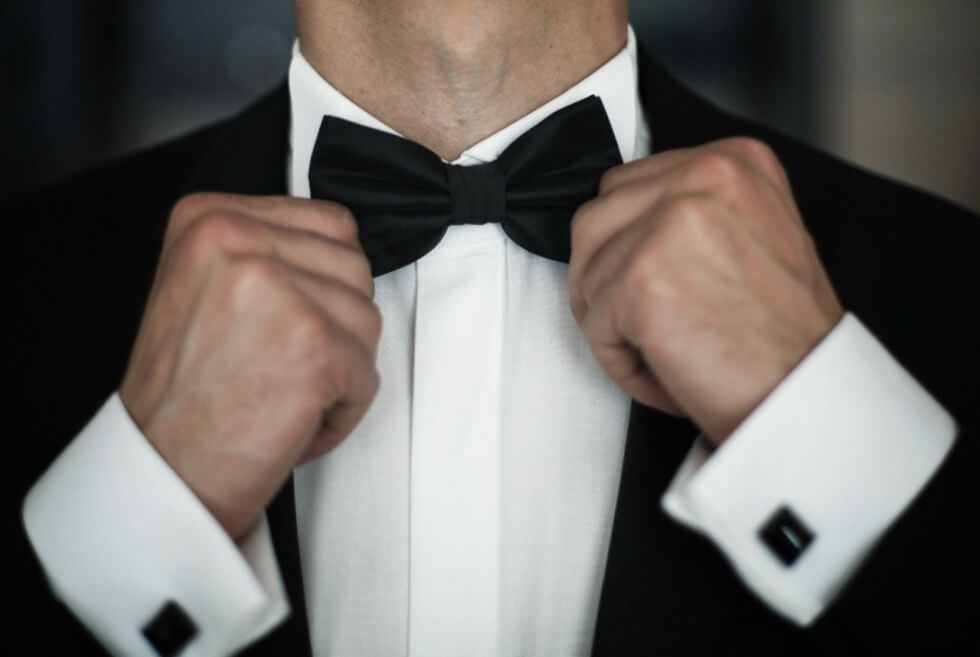
The tuxedo is not just another suit. It follows a precise dress code, historically associated with formal evening events. Its cut, satin lapels, and specific finishes are not merely aesthetic details, but well-established social markers.
Wearing a tuxedo means respecting a certain framework. It is not a matter of trend or personal preference, but of a codified form of dress. This is why it remains reserved for specific occasions where formal elegance is expected.
Outside of these contexts, a tuxedo can quickly appear excessive. Its role is not to be versatile, but to embody a particular type of elegance linked to special moments.
The Suit as a Tool for Adaptability
By contrast, Men’s suits stand out for their ability to adapt to a wide range of situations. A suit can be professional, formal, or more relaxed depending on its cut, color, and accompanying elements.
This flexibility is what makes it the cornerstone of the modern male wardrobe. A suit can transition from a business meeting to a social event or a more formal occasion simply by adjusting accessories or overall styling.
This adaptability explains why the suit remains essential. It does not follow a rigid code but adjusts to context, making it especially relevant for everyday use.
Why Mistakes Come From Context, Not Clothing
Most style mistakes do not stem from the clothing itself, but from a mismatch between outfit and situation. Wearing a tuxedo to a casual event or an overly plain suit to an elegant reception creates visual dissonance.
True elegance lies in the ability to correctly interpret the setting: the type of event, the time of day, and the expected atmosphere. These elements should guide clothing choices far more than trends or personal preferences.
Understanding this logic helps build a coherent wardrobe, where each piece has a clear purpose and a defined role.
Suits and tuxedos are not opposites. They simply serve different purposes. One offers flexibility and adaptability, while the other represents a more formal and codified elegance. Knowing when to wear each is less about rigid rules and more about reading the context intelligently.