Most of us don’t baby our iPads the way we did when we first unboxed them. They get tossed in backpacks between classes, left on the kitchen counter next to a full glass of water, propped on a workbench, or handed to a toddler mid-tantrum to buy five minutes of peace. An iPad has become less of a precious gadget and more of a tool, and tools get used hard.
That’s exactly why “durable” is one of the most searched-for qualities in an iPad case, and one of the hardest to judge from a product photo. Every case on the market claims to be tough. Far fewer are built to prove it. If you’re shopping for a case that needs to survive real life rather than a display shelf, here’s what’s worth paying attention to.
Drops Matter More than Scratches
Scuffs and scratches are cosmetic. Drops are what actually end an iPad’s life, and they’re also the most common way a tablet gets damaged. A 2020-era iPad Pro or a brand-new iPad Air both have the same vulnerability: a large glass screen with very little bezel to absorb an impact.
A genuinely protective case addresses this in two ways. First, raised, reinforced corners and edges that sit proud of the screen and back panel, so the case makes contact with the ground before the glass does. Second, some internal cushioning, usually a rigid outer shell paired with a softer internal layer, so the impact energy gets absorbed rather than transmitted straight through to the device. A thin, single-layer silicone or plastic shell might look protective, but it’s doing very little in a real fall from a desk or a backpack.
The Stand and Hinge Are Part of the Durability Equation
This gets overlooked constantly, but if your case has a built-in stand or folio cover, that mechanism is one of the first things to fail. Cheap magnetic folds lose their grip within months. Plastic hinges crack. A stand that wobbles or won’t hold an angle isn’t just annoying; it’s often a sign that the whole case wasn’t built to last.
If you prop your iPad up a lot (video calls, recipes, drawing, watching something while you cook), test how the stand holds up under repeated adjustment, not just how it looks in the first week.
Materials Tell You More than Marketing Copy
“Military-grade” gets thrown around loosely in iPad case marketing, and it doesn’t always mean much on its own. What’s more useful is looking at what the case is actually made from and how the layers are put together. A case built from a genuinely rigid polycarbonate frame with a shock-absorbing TPU liner is a fundamentally different product from a case that’s just molded plastic with some texture on it, even if both use similar language to describe themselves.
It’s also worth checking what happens after the drop. Does the case discolor, crack, or peel with UV exposure and regular handling? A case that looks tired after six months isn’t durable, no matter how it performed on day one.
Warranty and Repair Policies Are the Real Tell
Here’s a genuinely useful shortcut: look at how a company backs its own product. A brand that’s confident in its build quality will typically offer a real warranty or repair policy, not just a 30-day return window. ZUGU, for instance, backs its iPad cases with a repair guarantee, which is a much stronger signal of actual durability than any spec sheet, since it’s the company putting its money behind the claim rather than just making it.
Who Actually Needs a Genuinely Rugged Case
Not everyone needs the same level of protection. It’s worth being honest with yourself about how you actually use your iPad:
Students and commuters need a case that can handle being crammed into a backpack alongside textbooks, water bottles, and everything else, dropped on hallway floors, and generally treated without much ceremony.
Tradespeople and field workers need something closer to being genuinely rugged: dust resistance, drop protection at height, and a grip that works with gloves or dirty hands.
Parents handing a tablet to a toddler need a case that can survive being thrown, sat on, and occasionally used as a teething toy, which is a different (and often more demanding) durability test than any lab drop rating.
Frequent travelers need a case that protects against the specific abuse of travel: getting jammed into a carry-on, being banged against airport furniture, and being used constantly in transit where a drop is more likely than at home.
What to Actually Look for When You’re Buying
When you’re comparing options, a few concrete things are worth checking before you buy: raised edges around the screen and camera, a two-layer or hybrid construction rather than a single molded shell, a stand or hinge mechanism that feels solid when you test it in person or in a demo video, and a company that stands behind its build quality with a real warranty or repair policy rather than vague marketing language.
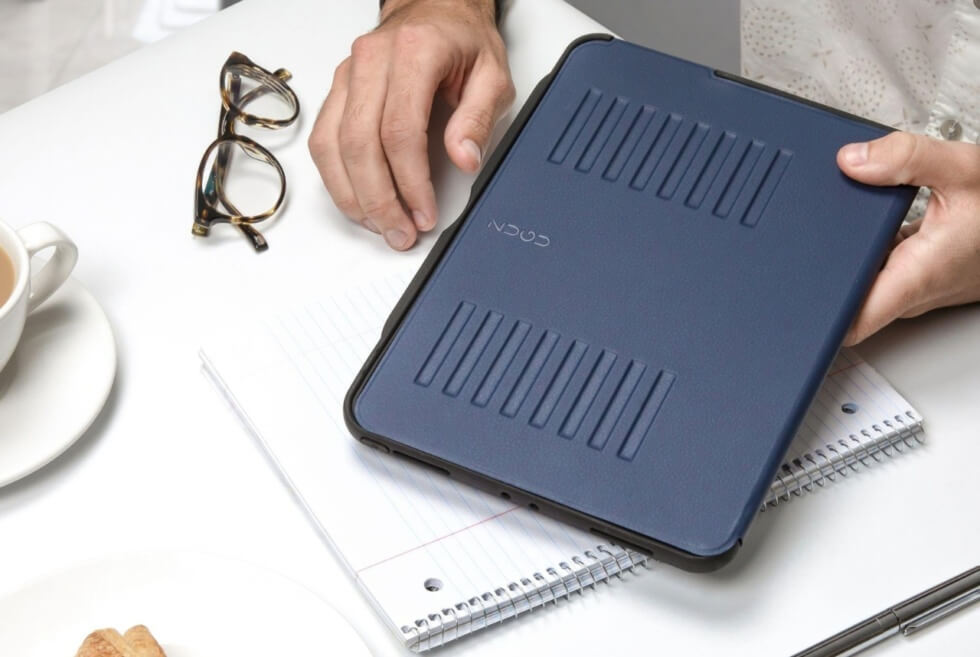
Brands like OtterBox have built their reputation on rugged protection, and that reputation is well earned in many cases. But it’s worth shopping around rather than defaulting to the most recognizable name. ZUGU has built its case lineup specifically around this kind of everyday durability, combining reinforced corners and a shock-absorbing shell with a stand designed to withstand repeated use rather than fail after a few months. You can see how that plays out across different iPad models in ZUGU’s full case lineup, which covers everything from the iPad Mini up to the largest iPad Pro.
Whatever you land on, the underlying test is simple: would this case survive the way you actually use your iPad, not the way the product photos show it being used? Answer that honestly, and the durable option usually becomes obvious.