Every guy who owns a serious watch eventually hits the same wall. The watch is great. The bracelet is great. And the bracelet is the reason the watch stays in the drawer on the days you actually do stuff: the trail run, the ride, the pool, the long-haul flight. The fix is not a second watch. It is a second strap, and if you buy the right one it will change how often you wear the first watch more than any other accessory you own.
Helvetus is the brand that has made a business out of getting that second strap right. It sells premium aftermarket straps for luxury watches, molded for the exact reference rather than cut to a lug width, to more than 65,000 customers in nearly every country, across more than twenty watch brands and several hundred models. Rubber is the core of the range, in FKM rather than silicone, with leather, suede, alligator and sailcloth for the days that call for them, and every rubber strap carries a lifetime warranty. Here is what that means in practice, and how to use it.
Why Swap A Perfectly Good Bracelet
Three reasons, in order of how much they matter. Weight: a steel Oyster bracelet is most of the mass on your wrist, and losing it makes a Submariner feel like a different watch on a ten-hour day. Wear: the bracelet is the part that scratches, stretches and dents, and an unpolished bracelet with tight links is what holds the resale value, so keep it in the box and it stays that way. Function: rubber does not care about sweat, sunscreen, salt water or chlorine, and it rinses clean in a sink. The bracelet still comes out for dinner. It just stops doing the dirty work.
What Makes A Helvetus Strap Different

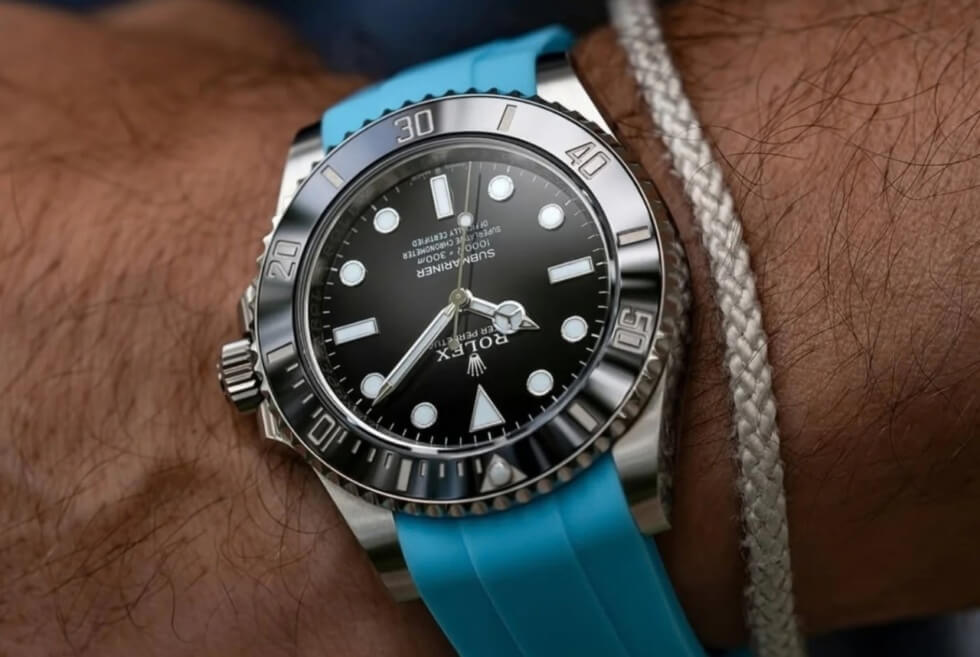
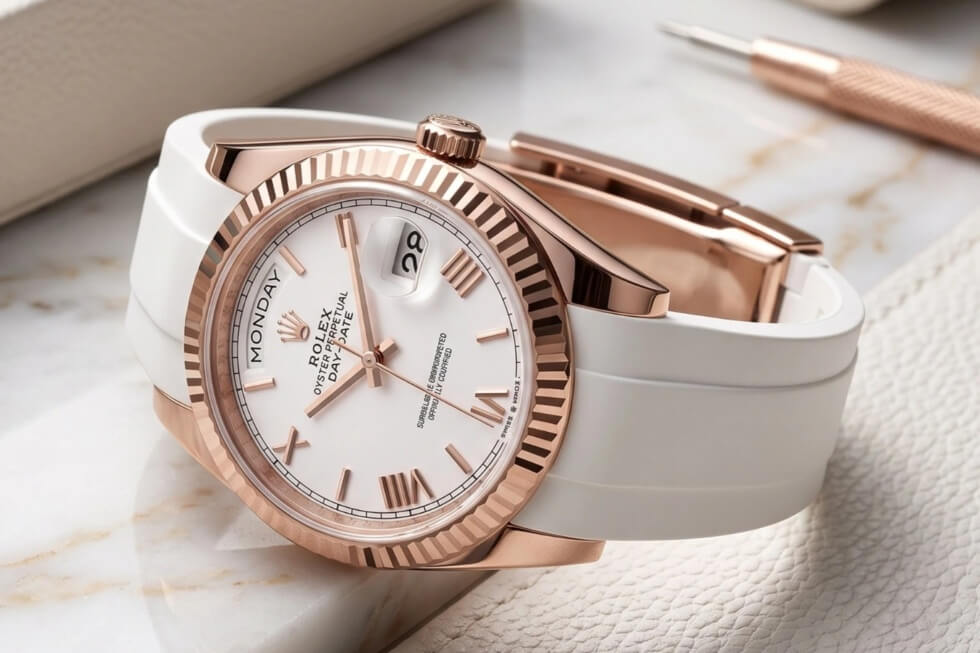
Most rubber straps are junk, and the reason is fit. A generic 20 mm strap is flat where the case is curved, so it leaves a gap at the lugs and loads the spring bars sideways. Helvetus molds each strap for a specific reference, with curved ends that sit flush against the case and the correct spring bars in the box. Its rubber straps for Rolex watches are made model by model: Submariner (40 and 41 mm, so 20 or 21 mm ends), Daytona on bracelet, GMT-Master II, Explorer, Datejust, Day-Date, Sea-Dweller, Yacht-Master, Sky-Dweller and more, nineteen Rolex lines in all.
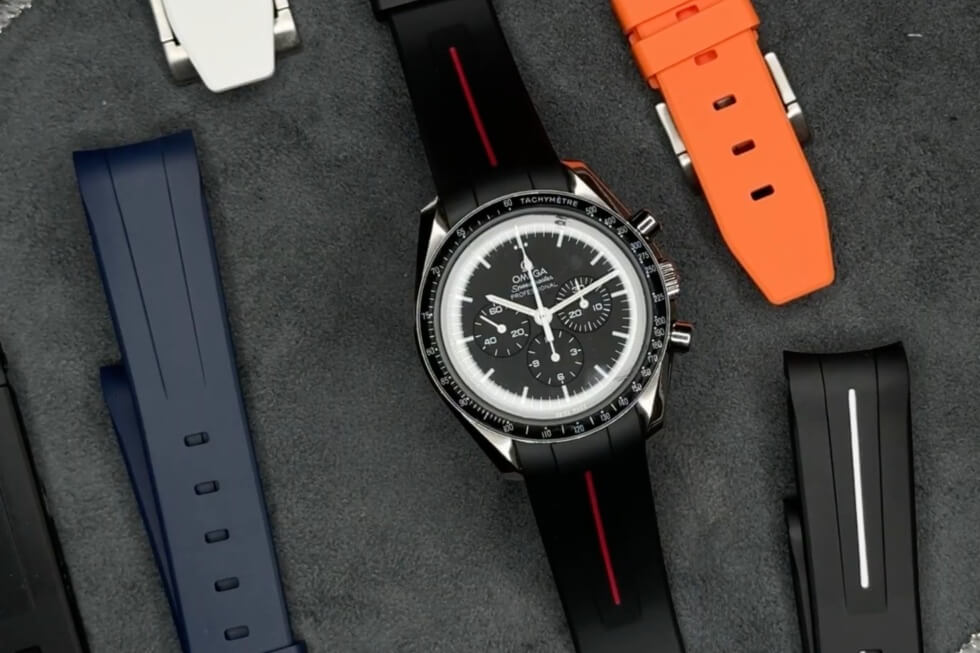
The material is the second difference. Silicone attracts lint, goes tacky in the heat and tears at the spring-bar hole. FKM, the fluoroelastomer used for seals in engines and aircraft, does none of that, is hypoallergenic, and is what every Helvetus rubber strap is made from. Third, the closure: a pin buckle is simpler and thinner; a deployant clasp is more secure and easier on the strap over years of use. Both come in steel, gold, rose gold or black, and you can order the strap without a buckle if you already have a clasp you like.
Cartier is its own animal, and Helvetus treats it that way. The current Santos de Cartier uses Cartier’s quick-change lug system, so the strap carries the matching fitting, not a spring bar; the Santos 100 is screwed on; the Santos-Dumont, Calibre and Roadster all differ. Their rubber straps for Cartier are built for each of those, with leather for the Tank, Ballon Bleu and Pasha, so you are not back at the boutique with a bag of screws.
The Five-Minute Install
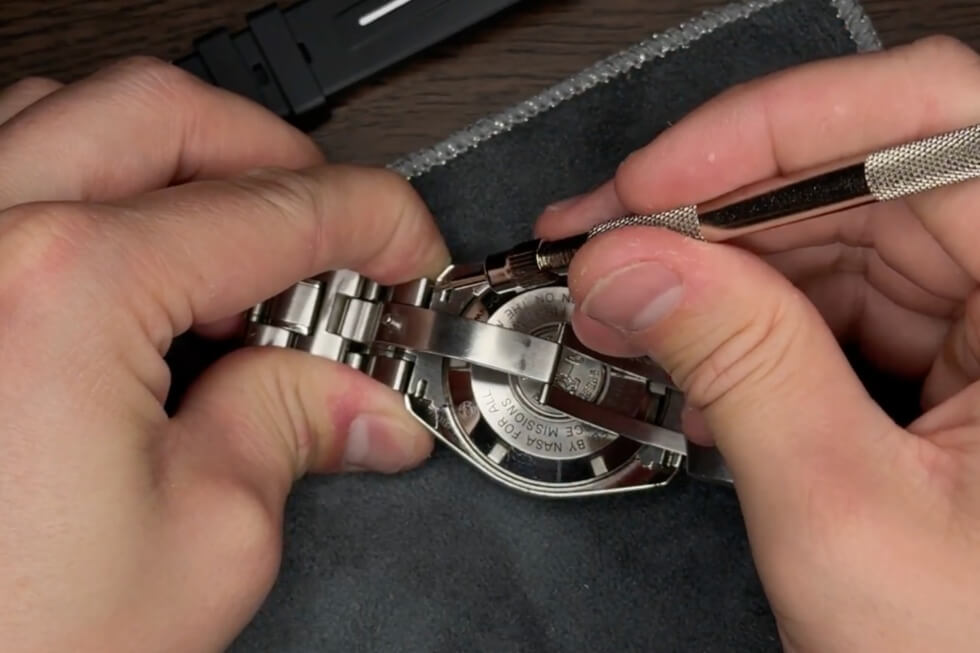
You need a spring-bar tool (Helvetus sells a matching one for about $15, and a cheap one from any watch supply store works), a soft cloth and decent light. Lay the watch face-down on the cloth. Push the forked end of the tool between the lug and the end link, compress the spring bar, and lift the bracelet away; repeat on the other side. Fit the new spring bars into the strap ends, hold the strap at an angle, seat one end of the bar in its hole, then compress the other end with the tool and let it snap home. Tug it. It should not move. On a current Santos none of that applies: press the catch on the underside of the lug, pull the bracelet off, click the strap on. Total time on the first attempt, five minutes. On the second, two. If you get stuck, the brand publishes a strap guide for almost every reference it makes, more than a hundred for Rolex alone.
Specs At A Glance
| Helvetus FKM rubber strap | |
|---|---|
| Fit | Molded per reference with curved ends; Rolex and Cartier, plus Omega, IWC, Tudor, Panerai, AP, Patek and more (20+ brands) |
| Material | Vulcanized FKM fluoroelastomer, hypoallergenic |
| Widths | 20 mm or 21 mm on Rolex depending on reference; Cartier fittings per model |
| Lengths | Varies by model and closure; adjustable to fit over 95% of wrists |
| Closures | Pin buckle or deployant clasp; steel, gold, rose gold, black; no-buckle option |
| Colors | A dozen, from black and navy to green, orange and white; two-tone LuxLine |
| Price | From $99 (Rolex Submariner), $129 (Daytona), $139 (Santos de Cartier) |
| Warranty | Lifetime on rubber straps |
| Shipping | Free worldwide, import duties covered, dispatched within 24 hours; 14-day returns |
Our Take On Helvetus
If you own one good sports watch and wear it three days a week, this is the accessory that gets it to seven. Buy the strap cut for your reference, spend the extra on FKM, and put the bracelet somewhere safe. At a hundred dollars with a lifetime warranty and no shipping or import costs, it is hard to see the argument against.
About Helvetus: Helvetus makes premium aftermarket straps for luxury watches, molded per reference for Rolex, Cartier, Omega, IWC, Tudor, Panerai, Audemars Piguet, Patek Philippe and more, in FKM rubber, leather, suede, alligator and sailcloth. More than 65,000 customers worldwide; lifetime warranty on rubber straps; free worldwide shipping with no import fees. Helvetus is not affiliated with any of the watch brands named.
Images courtesy of Helvetus.