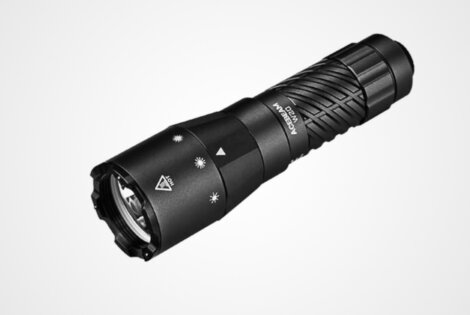
Situational awareness and carrying the proper everyday carry gear are essential. You train at the range, take martial arts classes, and stay alert to protect your family from immediate physical threats. Surviving a violent physical altercation on the street or in your home is only half the battle. The modern justice system does not automatically grant blanket immunity to anyone claiming they acted in self-defense.
The Reality of Lethal Force and Castle Doctrine
How the Courts Actually View Self-Defense
Statutory protections for self-defense are not a blanket authorization for force; they require a specific, articulable, and immediate physical threat rather than a mere sense of unease. The legal system demands your use of force remains strictly proportionate to the immediate danger you face. A recent home invasion in Vaughan, Ontario, perfectly illustrates a legally justified response to a lethal threat. A homeowner used his legally-owned firearm to defend against three masked intruders, ultimately avoiding charges because authorities deemed his actions a necessary defense against a life-threatening break-in.
Contrast that justified response with a highly publicized 2023 South Carolina “Stand Your Ground” road rage case. A judge stripped Charles Weldon Boyd of his self-defense protection after he shot and killed Scott Spivey. Secretly recorded conversations revealed Boyd attempting to manipulate law enforcement to evade accountability, completely invalidating his legal immunity. Cases like this prove that the courts will intensely scrutinize your actions, your intent, and your post-incident behavior.
Many individuals operate under dangerous, legally inaccurate assumptions regarding physical confrontations. Legal experts in Indiana consistently warn against common self-defense misconceptions that regularly result in severe legal consequences.
- The “First Strike” Myth: You cannot legally claim self-defense if you actively start or physically escalate the conflict.
- The Verbal Loophole: You cannot meet verbal threats, insults, or aggressive posturing with physical violence.
- The Disproportionate Response: You cannot use a deadly weapon against an unarmed, non-lethal threat without facing serious criminal charges.
Crossing the Line From Defender to Aggressor
Navigating Assault Thresholds in 2026
A physical defense can transform into a serious criminal offense in a fraction of a second if you misjudge the threat level. Data from the 2025 FBI Crime Data Explorer (CDE) Summary indicates that while overall violent crime has stabilized, aggravated assault remains the most frequently prosecuted violent felony in the United States. Prosecutors in 2026 are increasingly utilizing high-definition “Real-Time Crime Center” (RTCC) footage to aggressively pursue charges when a defender uses force that exceeds the immediate threat or continues striking an opponent who has clearly disengaged.
The sheer volume of criminal charges processed every year should make anyone reconsider escalating a physical conflict. In 2023, the Montgomery County District Attorney’s Office handled 8,020 adult criminal cases alone. Facing the justice system requires specialized expertise, as a single misunderstanding of the law can destroy your life. Understanding regional legal definitions, such as Montgomery County Assault Laws, becomes an essential barrier between a justified defense and a devastating felony conviction.
The boundaries regarding deadly force remain highly contested and legally perilous across the country. A recent Missouri Supreme Court ruling opened the door to using deadly force over minor threats, sparking massive debate among state prosecutors. Relying on shifting legal interpretations is a dangerous game, meaning you must exercise extreme caution and restraint in any conflict.
The Smart Approach for Avoiding the Courtroom
De-escalation Frameworks
The most effective self-defense strategy is avoiding the physical altercation altogether. Sensible individuals employ verbal de-escalation frameworks to defuse tense situations before they turn violent. You must maintain composure, create physical distance, and use a calm, steady voice to talk down an aggressor. Walking away from an aggressive individual protects your physical safety, your financial future, and your freedom.
Even if you act completely in the right during an unavoidable altercation, you face a brutal legal aftermath. Police officers will detain you, question you thoroughly, and require you to prove your actions were objectively reasonable. The system offers diversionary programs for minor infractions, but violent assault charges rarely see such leniency. While 1,049 adult cases in Montgomery County went through the Accelerated Rehabilitative Disposition program in 2023 for a second chance, those accused of violent crimes face mandatory minimum prison sentences.
| Factor | Justified Self-Defense | Criminal Assault | Legal Consequence |
|---|---|---|---|
| Triggering Event | Unprovoked, imminent physical threat | Verbal insult or past grievance | Cleared vs. Arrest |
| Level of Force | Proportionate to the attacker’s threat | Excessive (e.g., weapon vs. unarmed) | Civil immunity vs. Prison |
| Duration of Action | Stops immediately when the threat ends | Continues after the attacker surrenders | Justified vs. Aggravated charge |
| Your Intent | Solely to survive and escape | To punish, retaliate, or dominate the confrontation | Freedom vs. Felony |
Keeping Your Freedom Intact
Equipping yourself with reliable everyday carry (EDC) tools and developing proficiency in a martial art are foundational steps toward cultivating a disciplined sense of self-assurance. True preparedness means maintaining absolute control over your ego and fully grasping the heavy burden of the law. You must fight only as a last resort when no other options exist for physical survival. Allow others to argue over minor insults while you secure your safety, protect your family, and keep your freedom intact.