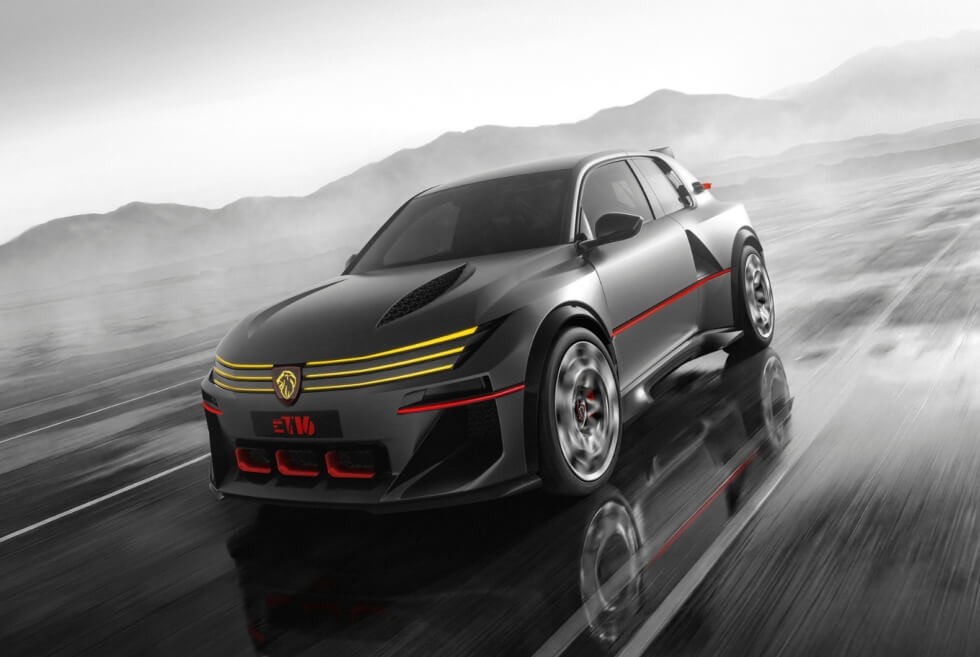
Peugeot has revived its wildest Group B shape as an 816-horsepower electric hatchback that can reach 186 mph in 16 seconds.
The E-T16 Concept is a tribute to the 205 T16 that won back-to-back World Rally Championships in 1985 and 1986, but the nostalgia is only half the story. Beneath the huge arches and grey bodywork sits a three-motor electric system, an 85 kWh battery and a preview of the design language Peugeot intends to use on the next E-208.
Peugeot calls it a hyperhatch. That sounds excessive until you look at the numbers.
Three Motors Make It The Most Powerful Peugeot Yet
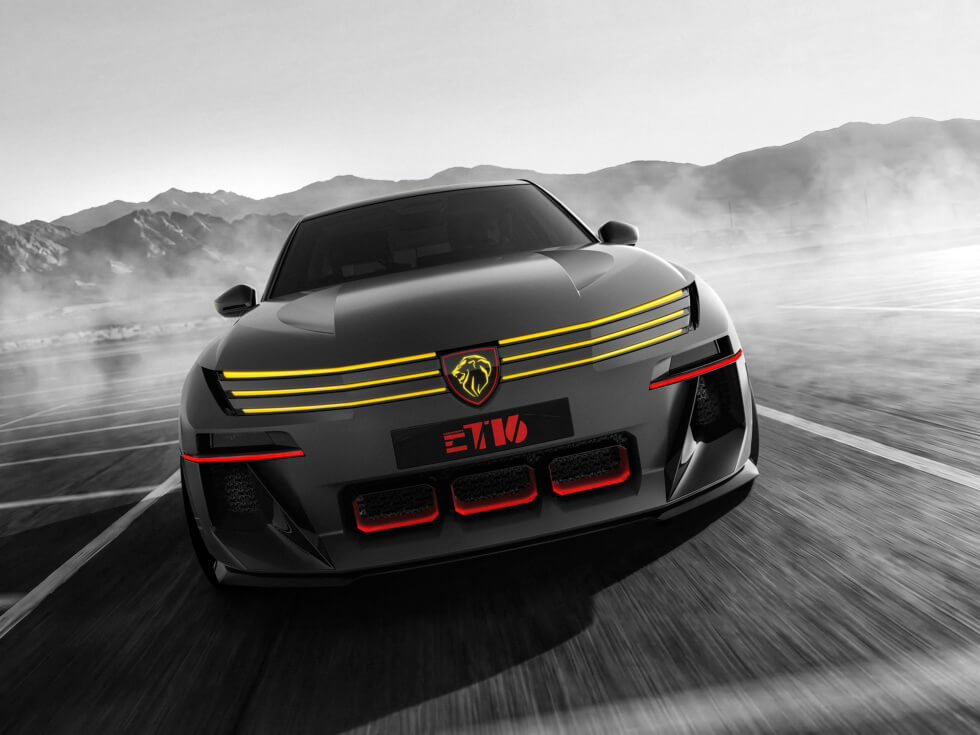
One electric motor drives the front axle and two more sit at the rear. Together they produce 816 horsepower, with torque vectoring continuously changing the balance between the rear wheels and the two axles.
Peugeot claims 0 to 62 mph in 2.5 seconds, 0 to 186 mph in 16 seconds and a top speed of 192 mph. The power-to-weight ratio is listed at less than two kilograms per horsepower.
The braking hardware is equally serious. Four 380 mm discs sit behind 21-inch wheels, with 275 mm tyres at the front and 315 mm rubber at the rear. A vertically mounted hydraulic handbrake gives the cabin one genuinely old-school rally control among all the digital hardware.
The E-T16 has three preset driving modes and one custom mode. Track mode alters power delivery, torque distribution, steering and suspension settings for circuit use.
It Is Designed To Keep Its Power For More Than One Lap
Fast electric cars can reduce output when their batteries and motors become too hot. Peugeot Sport says the E-T16’s Side Cooling system removes heat through the walls of the battery cells rather than only through the base.
Peugeot claims the concept can complete more than three consecutive laps of the Nürburgring Nordschleife in Performance mode without power derating. That is over 60 kilometres of hard running before the car starts protecting itself by cutting output.
The 800-volt system also allows the 85 kWh battery to charge from 10 to 80 percent in under 15 minutes. Peugeot quotes up to 249 miles of WLTP range, although nobody should expect that figure while repeatedly using all 816 horsepower.
The focus on thermal management makes the E-T16 more than a static show car with an outrageous power figure. Whether it will ever turn a wheel at that pace outside Peugeot’s simulations is another question.
The Shape Comes From The 205 T16
The original 205 T16 was one of the stars in MensGear’s Group B rally car collection, and Peugeot has preserved several of its most recognisable details.
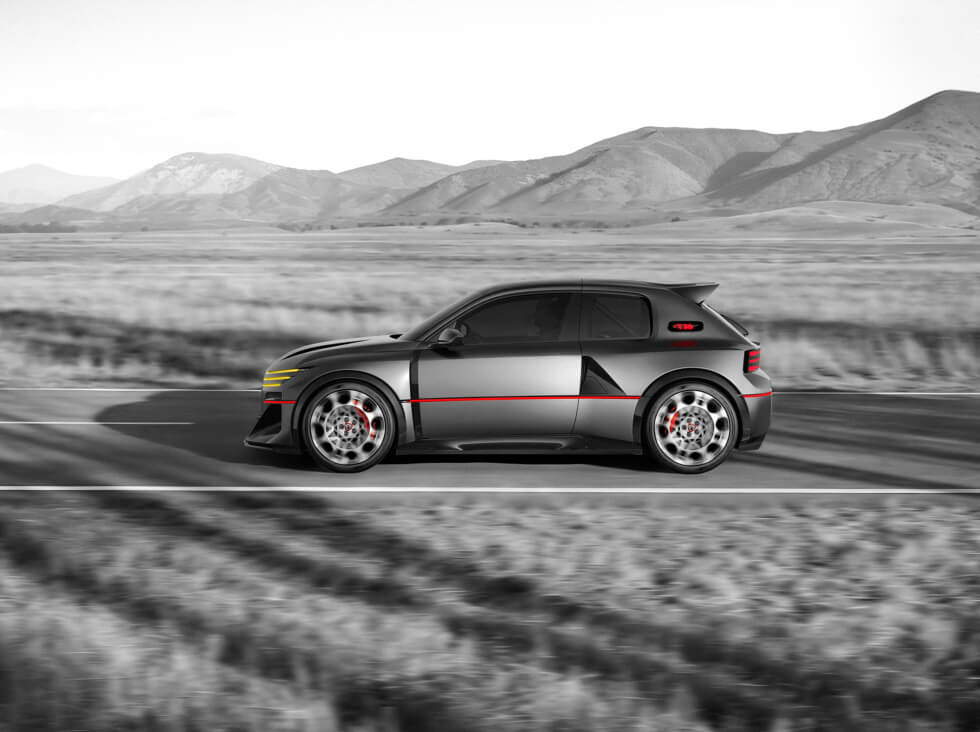
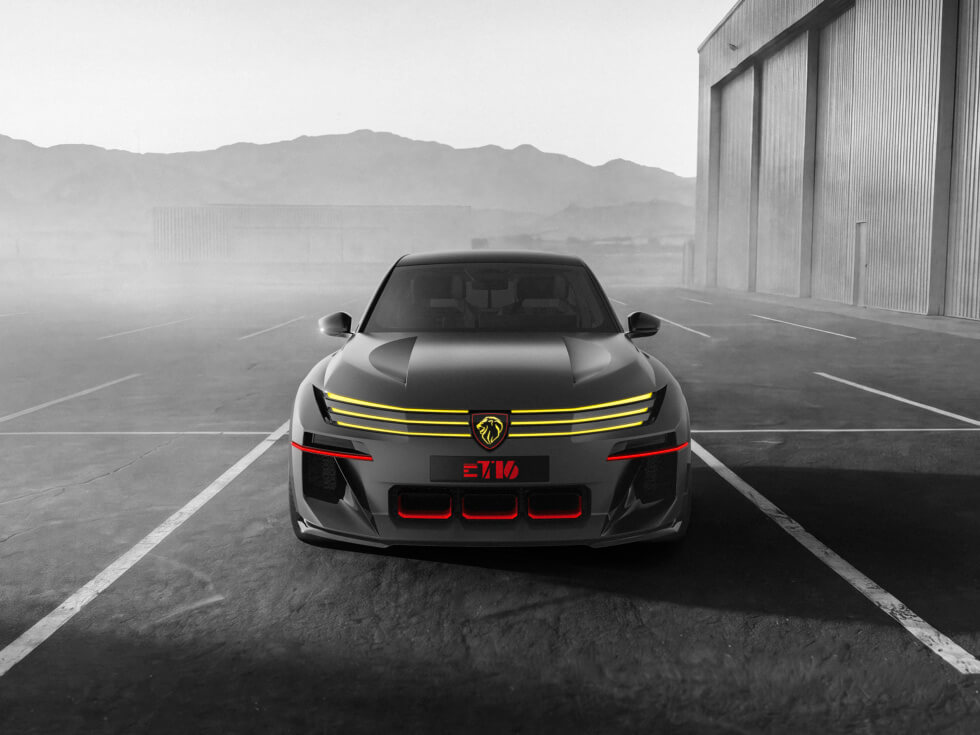
Matt Winchester Grey paint, white wheels and a thin illuminated red line recall the old rally car’s colour scheme. The floating C-pillar remains, while the side intake ahead of the rear wheel now hides the charging port and door-release mechanism.
The entire rear body section tilts open just as it did on the 205 T16. Instead of a turbocharged four-cylinder engine, it exposes the two rear motors, suspension components, a red tubular structure and enough storage space for two helmets.
Peugeot has also exaggerated the silhouette with a vented bonnet, huge cooling openings, a twin rear diffuser and what it calls a cat-ear rear wing.
The Part Most Likely To Reach Production Is Inside
The E-T16 itself is not confirmed for production. Its more realistic job is showing what the next E-208 could look and feel like.
A rectangular Hypersquare steering control replaces a conventional wheel and works with steer-by-wire rather than a mechanical steering column. In this concept, the centre of the Hypersquare contains a configurable display for speed, lap times and performance information.
A curved 21-inch panoramic screen stretches across the dashboard, while carbon fibre, anodised aluminium and technical mesh give the cabin the atmosphere of a rally car from the future rather than a stripped competition shell.
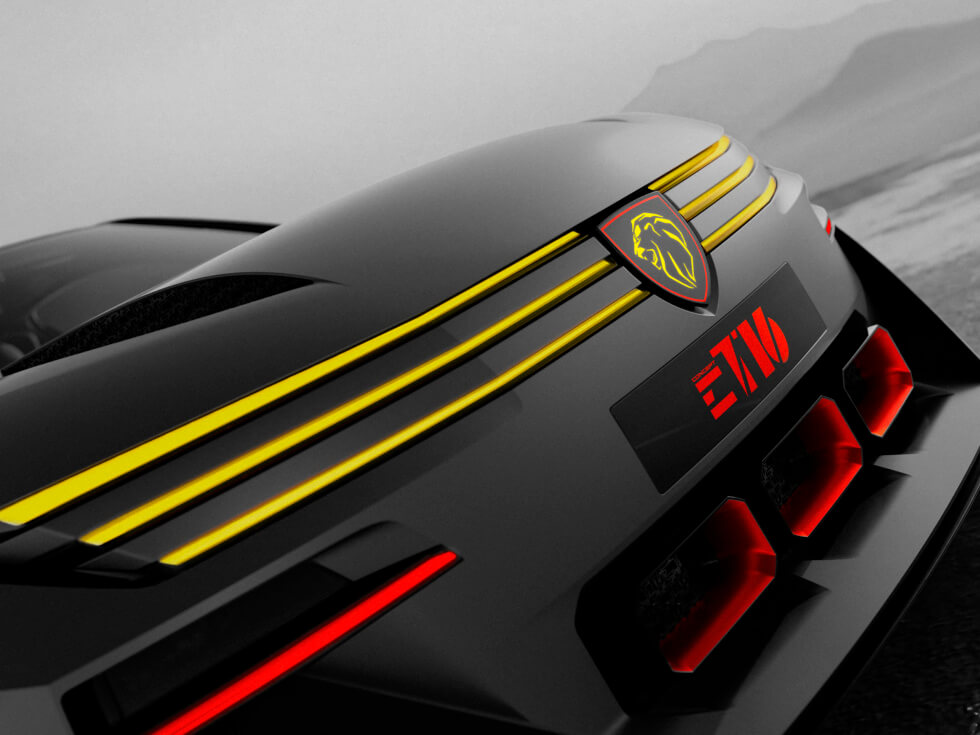
Peugeot says the next E-208 will use the new light signature, a production version of Hypersquare and the next-generation i-Cockpit. The 816-horsepower drivetrain is far less likely to make the same journey.
That makes the E-T16 similar in spirit to the Peugeot e-Legend Concept: a dramatic piece of nostalgia used to make future production technology easier to imagine.
The old 205 T16 existed because rally rules demanded a road-going homologation model. The E-T16 exists because Peugeot wants its next electric supermini to inherit some of that car’s attitude.
Explore The E-T16 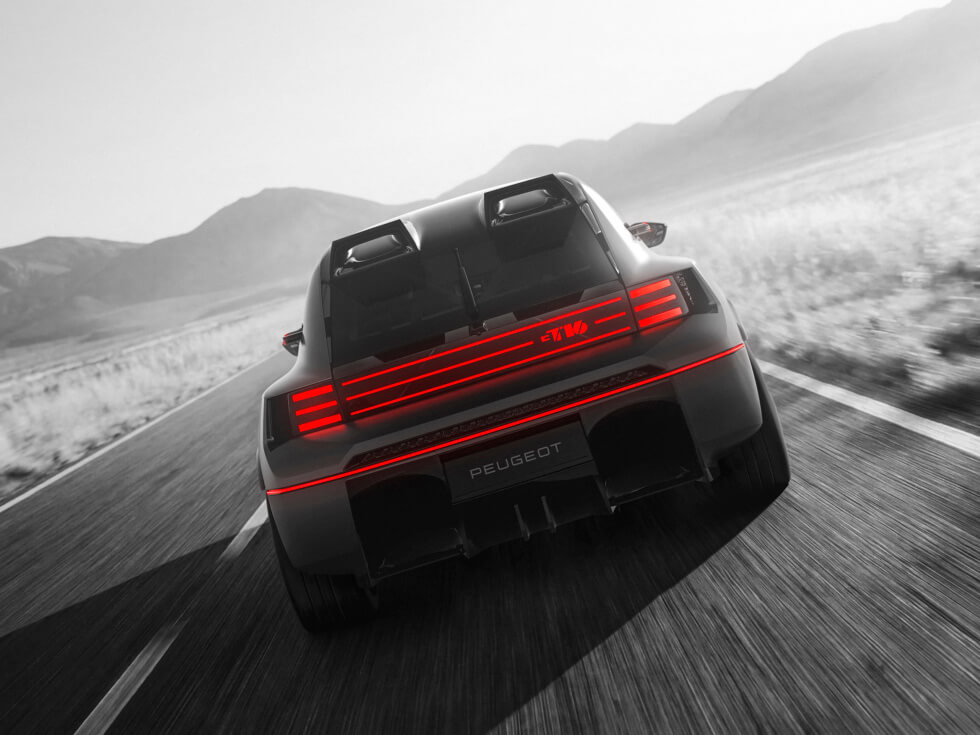
Images courtesy of Peugeot / Wismo Automotive