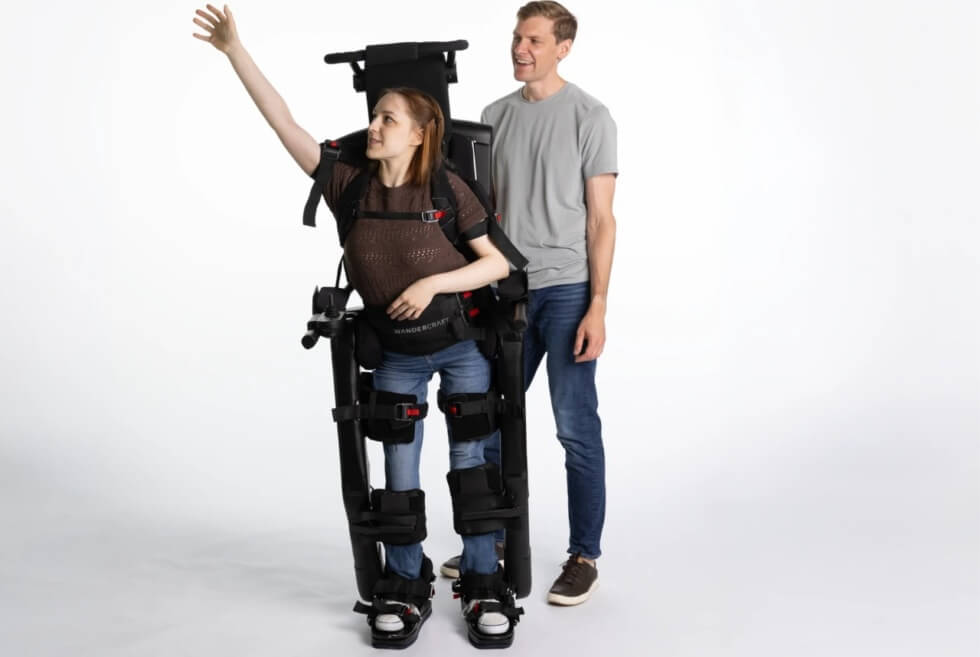
French company Wandercraft has received FDA clearance to release Eve, the world’s first self-balancing personal exoskeleton, to the U.S. market on Sept. 17. The device enables spinal cord-injured users to stand on their feet.
It’s not designed to replace a wheelchair but complement it. It expands opportunities for users to stand, bend, turn, walk, side-step, move back and forth, shift from foot to foot, and more. The company says any adult with a spinal cord injury at any level can use it, as long as they can operate the joystick that controls the exoskeleton.
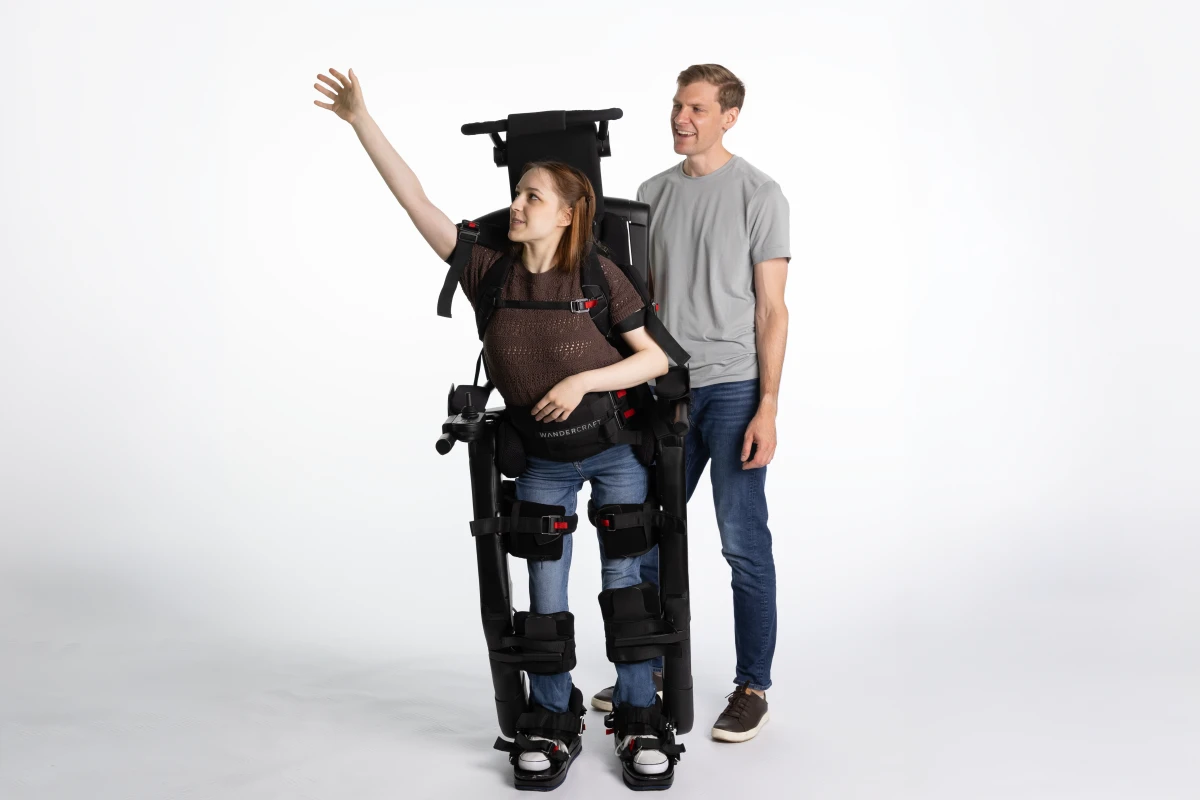
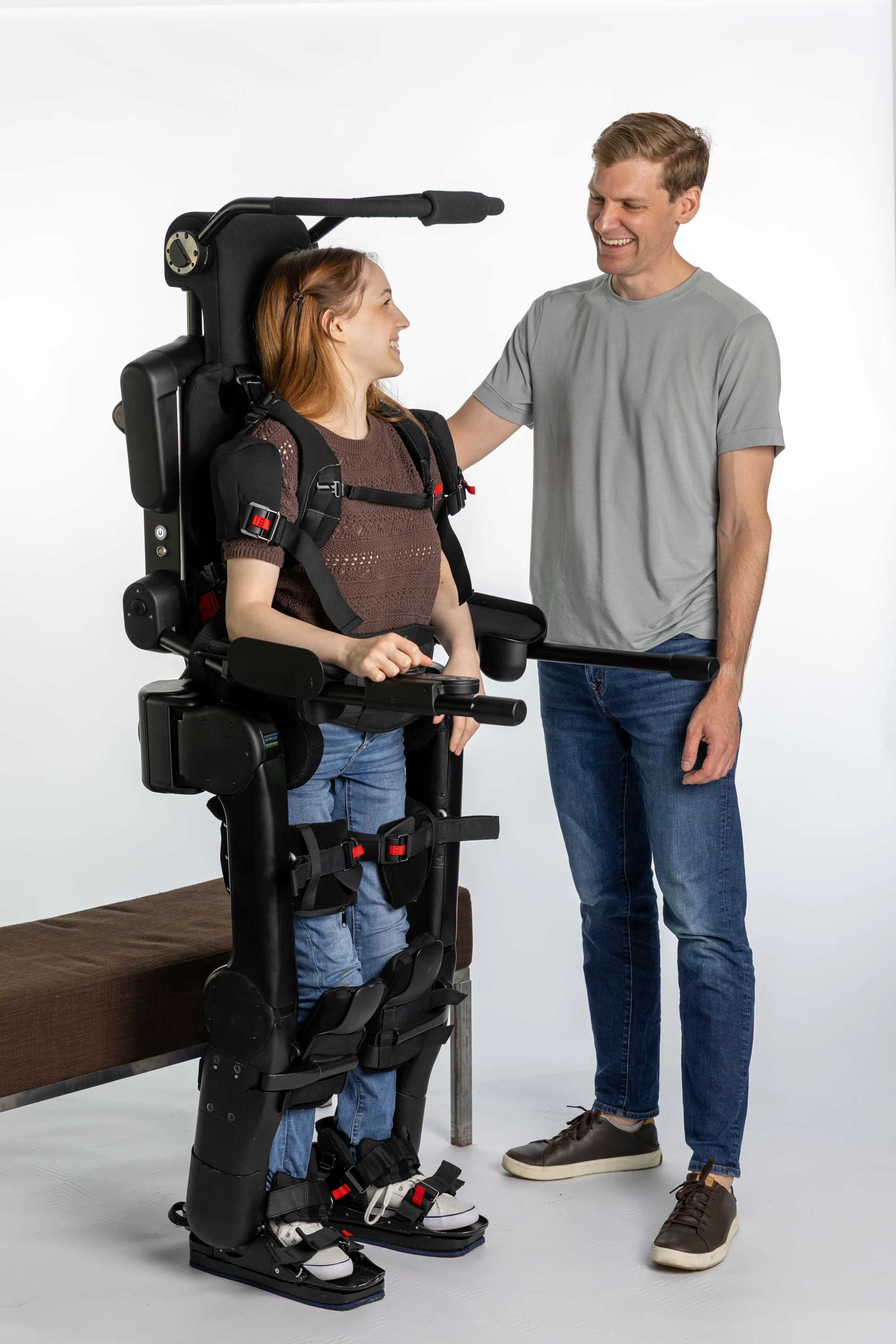
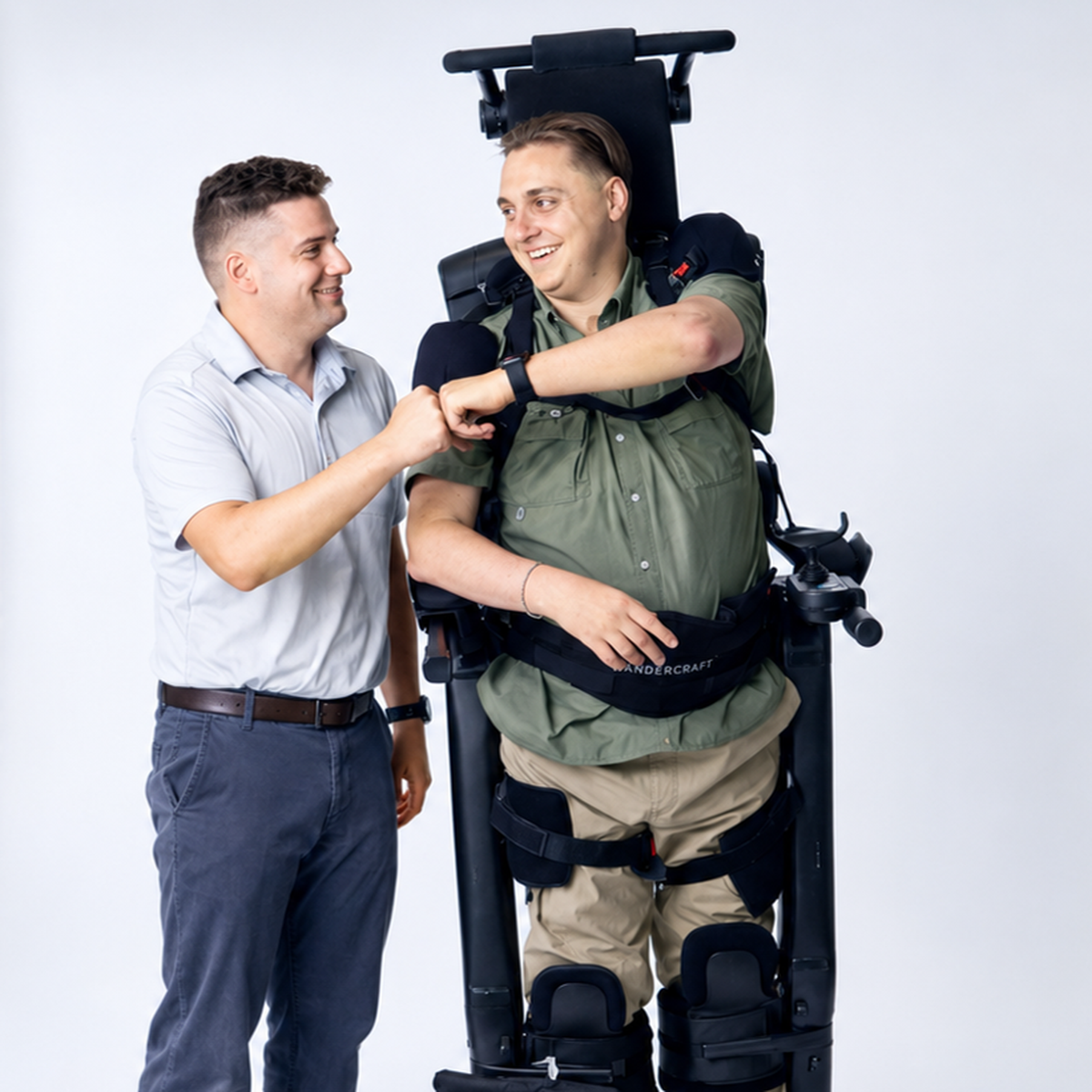
Eve brings upright mobility beyond the clinic and into homes for eligible wheelchair users. It opens new possibilities beyond rehabilitation, by “bringing hands-free upright mobility to ordinary moments that may hold extraordinary meaning.” The technology straps on like a rigid vest and uses bands to secure the torso, waist, thighs, legs, and feet.
Moreover, it features a headrest, armrests, a front safety bar, and a rear handle for outside assistance. Twelve motors built into the hips, knees, and ankles also help with walking. Meanwhile, integrated sensors constantly read and correct balance regardless of whether the person is standing still or moving. This is what Wandercraft calls its self-balancing trick that gives it an edge over earlier exoskeleton models.
Technicians calibrate Eve according to the user’s height, leg length, and joint flexibility, and calibrate the joystick to the person’s hand mobility. The device has a fixed top speed of 0.25 meters per second (0.56 mph) for safety and lasts up to four hours on a full charge. If the power runs out, the motors disengage and a braking mechanism gradually lowers the user to the ground.
Learn More Here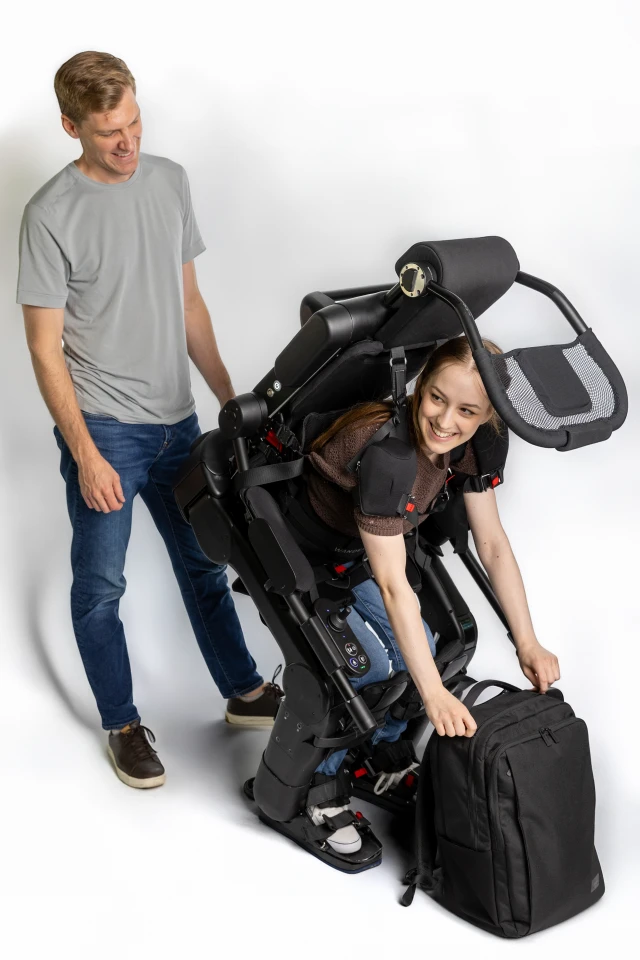
Images courtesy of Wandercraft