You find the right boat online. The price looks fair, and the photos show clean seats. Then you remember that the hull is usually the easy part. The outboard hanging off the back decides whether the deal is a good one.
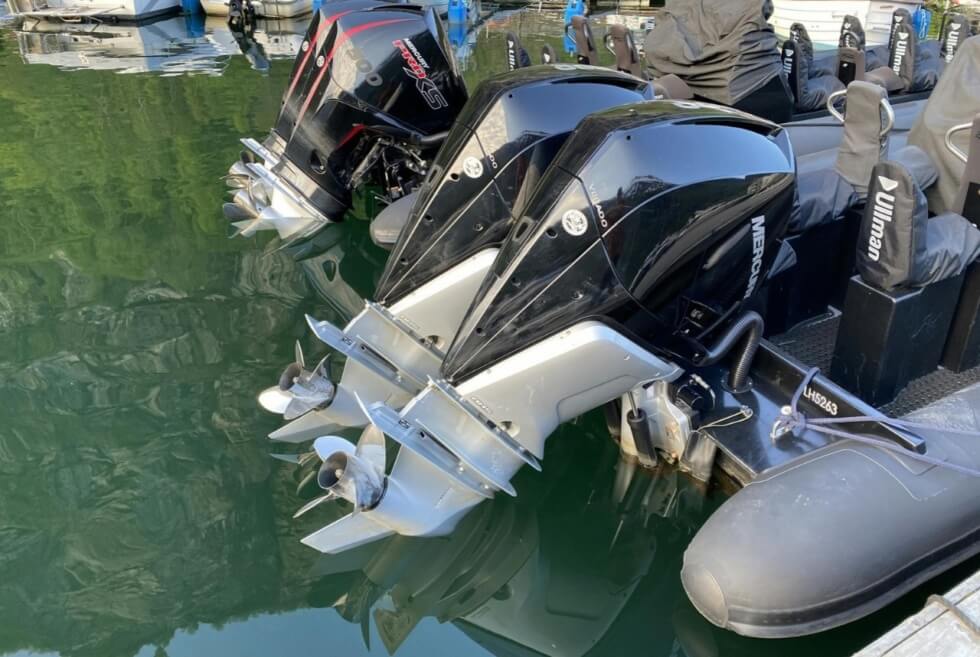
That is doubly true on brackish water like the Pamlico River and Pamlico Sound, where salt works on every metal part. Avalanche Motorsports, a family-owned boat dealer in Washington NC, sells fishing and pontoon boats to people who run these waters every weekend. Whether you buy from a showroom or a stranger’s driveway, the checks below tell you what you are really paying for.
Why Does the Outboard Decide the Deal?
A tired engine can cost more to replace than an older hull is worth. That makes the motor the ceiling on any offer you make.
Fuel burn matters as much as condition. The NC Sea Grant fuel guide gives a full-throttle rule of thumb of about one gallon per hour for every 10 horsepower. A 250-hp four-stroke at wide-open throttle, around 6,100 rpm, burns roughly 25 gallons an hour.
Engine type changes that math. The same guide notes that older carbureted two-strokes can use about twice as much fuel per horsepower as four-strokes. A cheap carbureted motor can hand its discount back at the fuel dock.
Hull weight sets how much engine you need. A near flat-bottomed boat needs about 2.5 horsepower to plane every 100 pounds. Rigs like a fishing platform boat or a fishing PWC skip the outboard question entirely, but anything with a transom does not.
What Should You Check Before the Engine Starts?
Bring a flashlight, a rag, and a small drain pan. Do this part on land, with the cowling off.
- Match the paperwork. The Hull Identification Number on the transom runs 12 characters under Coast Guard rules. It should match the title and registration exactly.
- Read the hours with some doubt. Low hours on a neglected motor are worse than high hours on a serviced one. Ask for receipts.
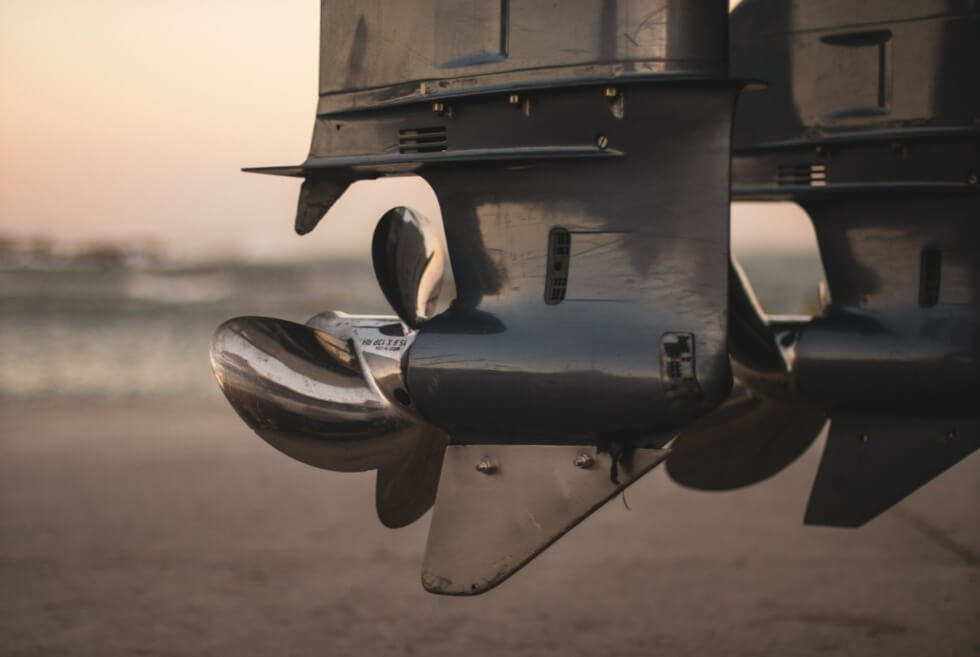
- Drain a little gear oil. Pull the lower unit’s bottom screw. Milky oil means water got past a seal, and metal on the magnetic plug means gear wear.
- Look for salt crust. Check wiring, the powerhead, and the bracket bolts. Heavy green or white corrosion on a brackish-water motor is a warning.
- Check the anodes. These sacrificial blocks are meant to wear away. Untouched anodes may be painted over and doing nothing.
- Spin the prop and check the skeg. Dings and bent blades point to groundings. The sounds are shallow, and plenty of engines have met a sandbar.
- Pay for a compression test. A mechanic reads each cylinder. Readings should sit close together, and one low cylinder points to rings, valves or a head gasket.
What Does a Sea Trial Tell You?
Never buy an outboard you have not run on real water. Muffs and a test tank only show part of the picture.
Start it cold. A healthy engine fires quickly and settles into a steady idle. Watch the telltale, the small stream of water from the lower cowling. A weak stream can mean a worn water pump impeller or a blocked passage.
Run it up to wide-open throttle and note the RPM. It should land inside the maker’s recommended range for that model. If it falls short, the prop, the hull bottom or the engine is hiding something.
Then test the cruise. NC Sea Grant says engines run most efficiently at 75 to 80 percent of rated output. In its example, easing that 250-hp four-stroke back to about 77.5 percent cut fuel burn to 12.5 gallons an hour. That is a 50 percent saving for a modest drop in speed.
Watch the trim as well. Correct trim usually sits two to five degrees bow up. A boat that will not trim cleanly may have a tired tilt and trim unit, which is another repair to price in.
What Does a Used Boat Really Cost In North Carolina?
The asking price is not the full price. North Carolina taxes boats differently from cars, and the cap favors bigger purchases.
| Cost item | What North Carolina says |
| State sales or use tax | 3% of the sales or purchase price |
| Maximum tax per boat | $1,500 |
| Price where the cap kicks in | $50,000 |
| Local and transit sales tax | Not charged on boats |
| What counts in the price | Attached accessories, installation labor, freight and prep charges |
Those figures come from the NC Department of Revenue. On a $20,000 rig, 3 percent works out to $600. On a $60,000 boat, the tax stops at $1,500.
Budget for new fuel filters, a fresh impeller and gear oil too. Those first-season costs add up fast.
Who Can Run the Boat Once It Is Yours?
Buying the boat is half the job. The NC Wildlife Resources Commission also sets rules for who drives it and what rides along:
- Anyone born on or after January 1, 1988 needs a boating education certificate to run a vessel with a motor of 10 horsepower or more.
- Children under 13 must wear a life jacket while a recreational boat is underway.
- Motorized boats must be registered with the commission before they run on public water.
Photo by Annie Lang on Unsplash
Alt text: An angler casting from a wooden dock at sunrise while a small fishing boat drifts on the calm lake beyond
Plan fuel the way charter captains do. NC Sea Grant recommends a rule of thirds: a third to get there, a third to get back and a third as a safety margin.
Red Flags That Should Stop a Sale
- Milky gear oil or metal on the drain plug.
- A weak telltale stream on a cold start.
- Wide-open throttle RPM outside the maker’s range.
- Uneven compression across cylinders.
- A HIN that does not match the title.
Any one of these is a reason to renegotiate. Two or more is a reason to walk away.
Buy the Engine, Then the Boat
Spend an afternoon on these checks, pay for a compression test, and run the boat on open water. The rig you tow home should cost what you expected, not what the last owner left behind.
Frequently Asked Questions
How Many Hours Is Too Many On a Used Outboard?
Hours alone do not settle it. A serviced four-stroke with high hours can outlast a neglected low-hour engine. Ask for records and a compression test before you judge.
Should a Mechanic Inspect a Used Outboard Before You Buy?
Yes. A marine mechanic can test compression and spot wear a buyer misses. The fee is small next to a lower unit or powerhead repair.
How Much Is the Boat Sales Tax In North Carolina?
The state charges 3 percent of a boat’s sales or purchase price, with a cap of $1,500 per boat. Local and transit sales taxes do not apply to boats.
Who Needs a Boating Education Card In North Carolina?
If your birthday falls on January 1, 1988, or later, the state wants that card before you drive anything pushed by 10 horsepower or more. The NC Wildlife Resources Commission lists approved courses, including online options.