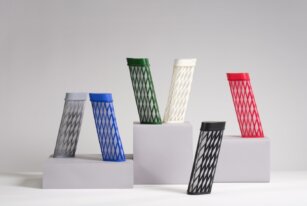
The more ribs the umbrella has, the better its wind resistance and canopy structure. But ultimately, they will still rust and break over time, especially those made with metal. Likewise, the fabric material of most canopies are likely to tear. Hence, Modestas Balcytis reimagined the most unchanged everyday object into a sleek, origami-engineered, frameless design called Ori umbrella.
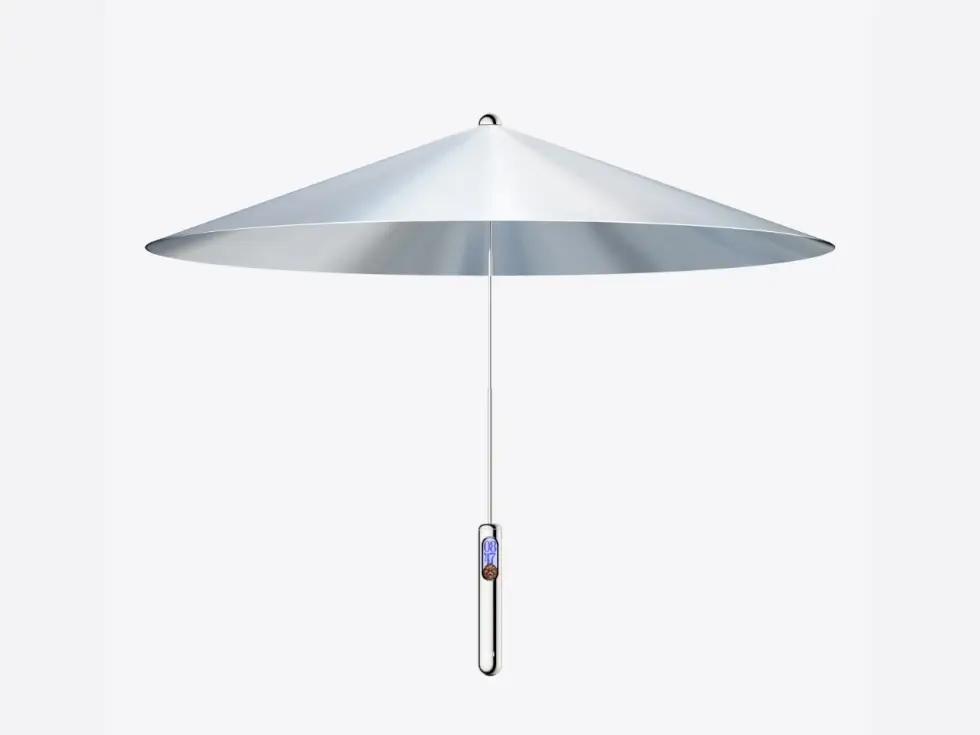
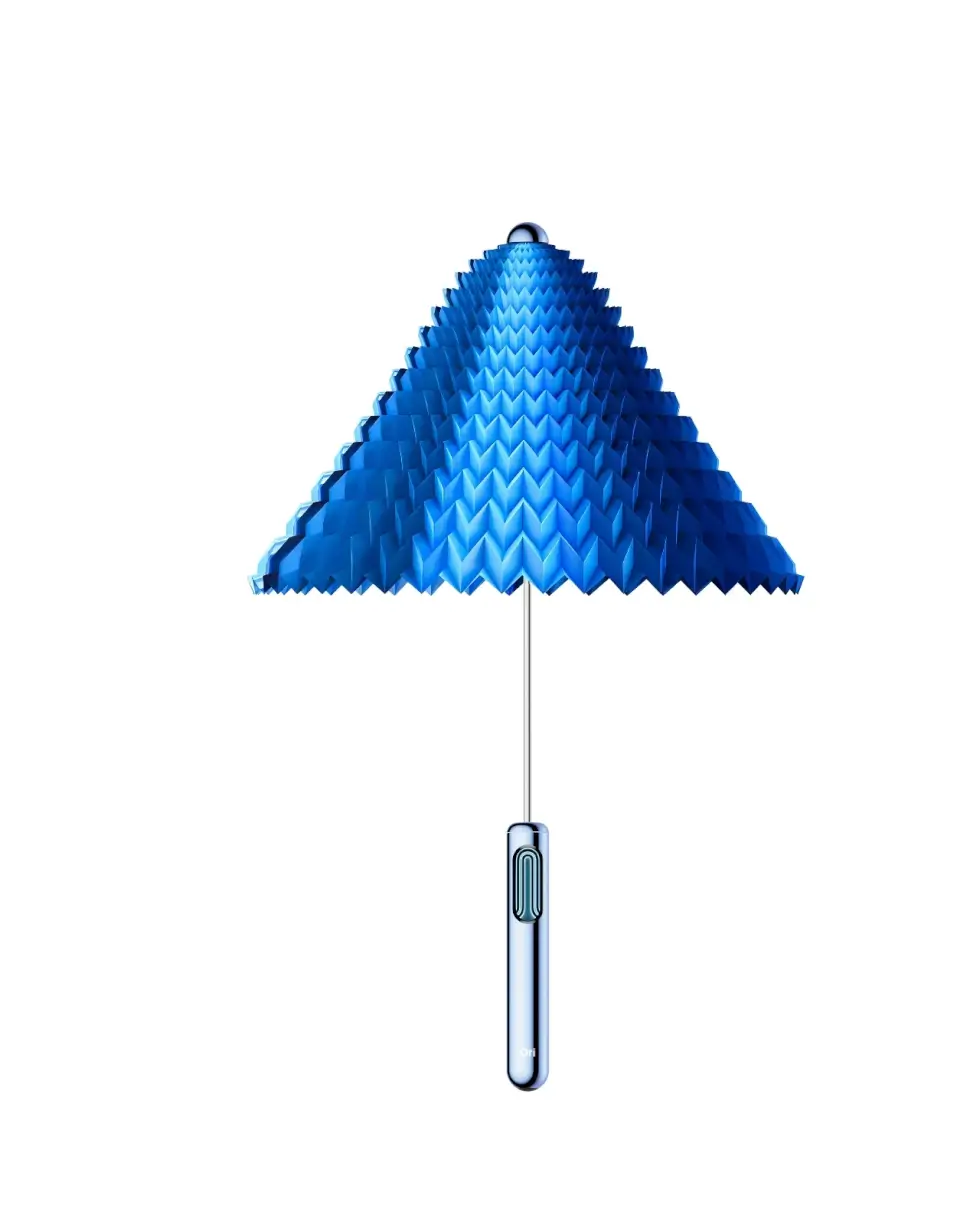
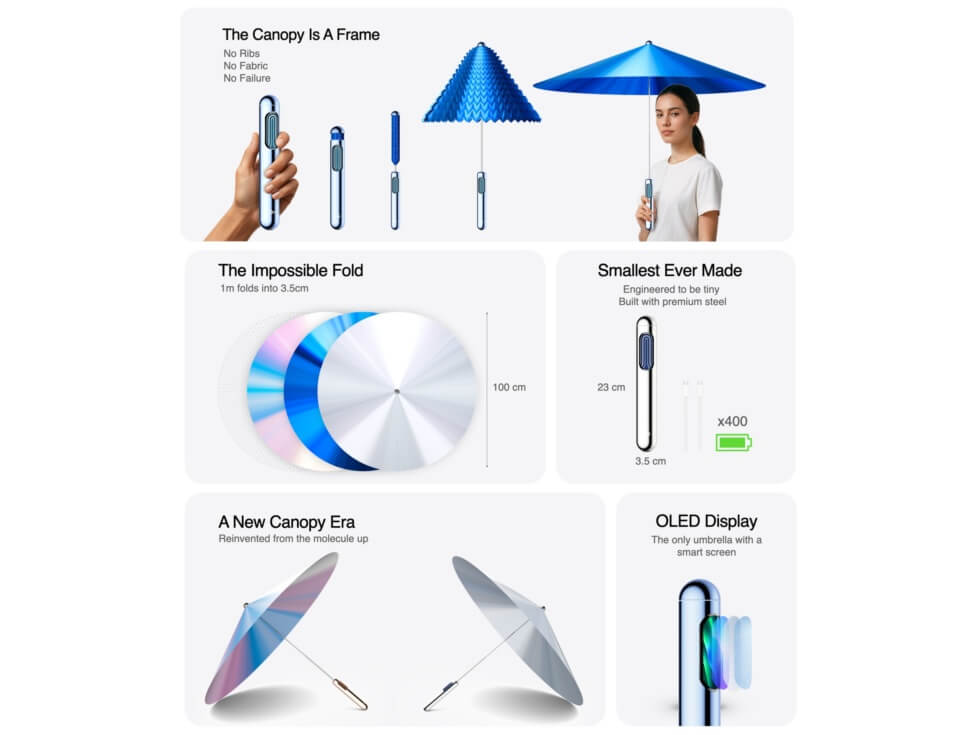
Founded by MIT engineers and origami specialists, the umbrella uses a patented Miura-based folding architecture, the same kind that NASA utilizes for deployable spacecraft structures. This technique eliminates the ribs, fabric canopy, and the usual failure points.
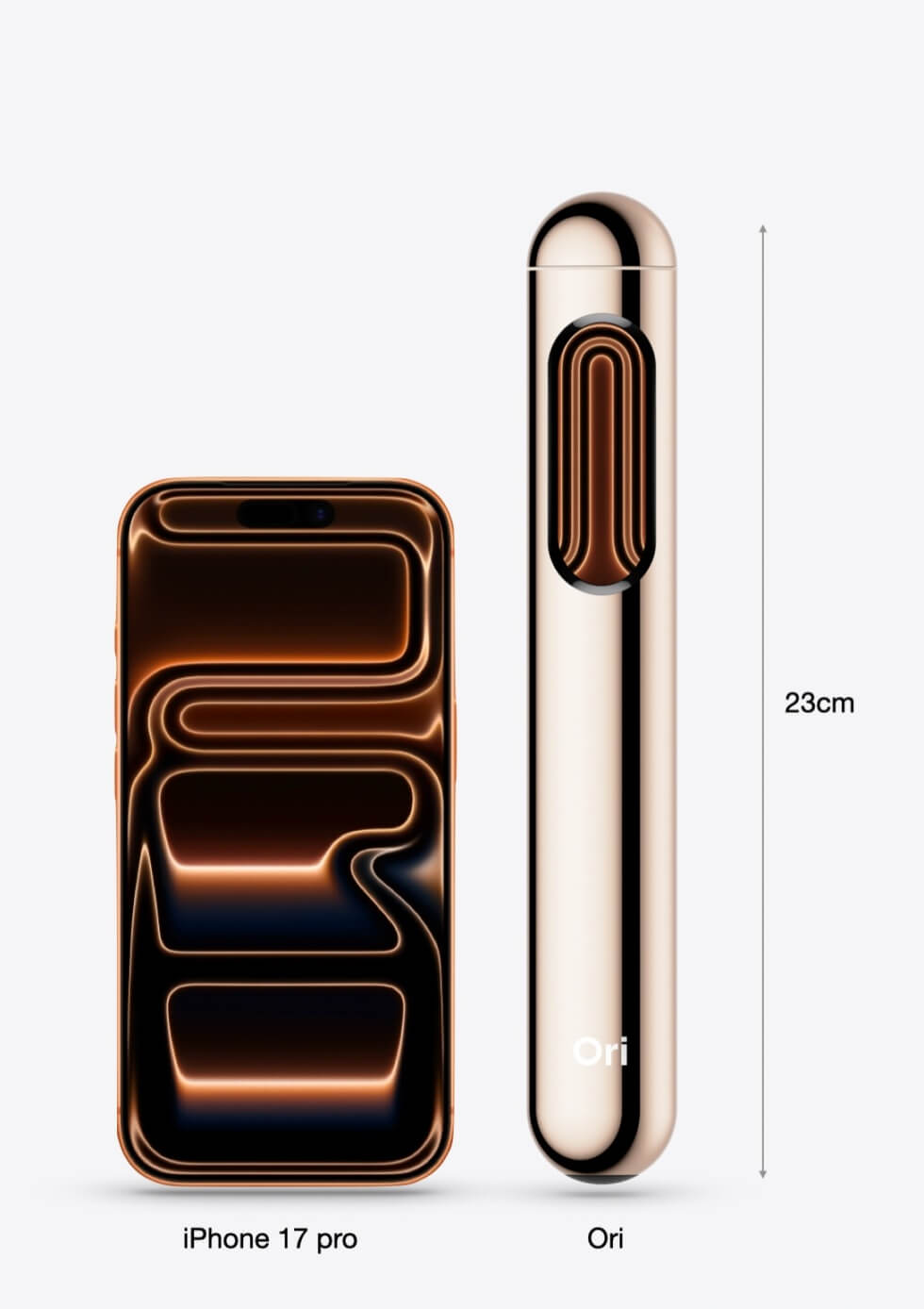
Instead, Ori compresses a traditional one-meter canopy into a pocket-sized 3.5 × 23 centimeter cylinder that transforms the canopy itself into a rigid, self-supporting structure. The canopy unfolds in one smooth movement with what the team called a “1-degree of freedom motion.”
Aside from the fluid transformation, the umbrella achieved its compact form through precise crease pattern engineering, like the crisp folds in an origami. The team filed four patents for the design, which covers the folding system, internal core, and the locking mechanism.
Moreover, Ori has a 1.9-inch OLED display integrated into its handle, which provides the time, air quality readings (AirSense), and visual themes that change according to mood or weather (MoodShift). The display also offers color palettes customization (Display Aura) and Smart Touch, for one-tap open/close interaction.
Ori runs on a high-efficiency motor and battery that offers months-long of usage. This umbrella design befits today’s highly technological generation, even its color options are very modern. It comes in an iPhone grade aluminum housing with either silver, rose gold, or sky blue finish.
Check It Out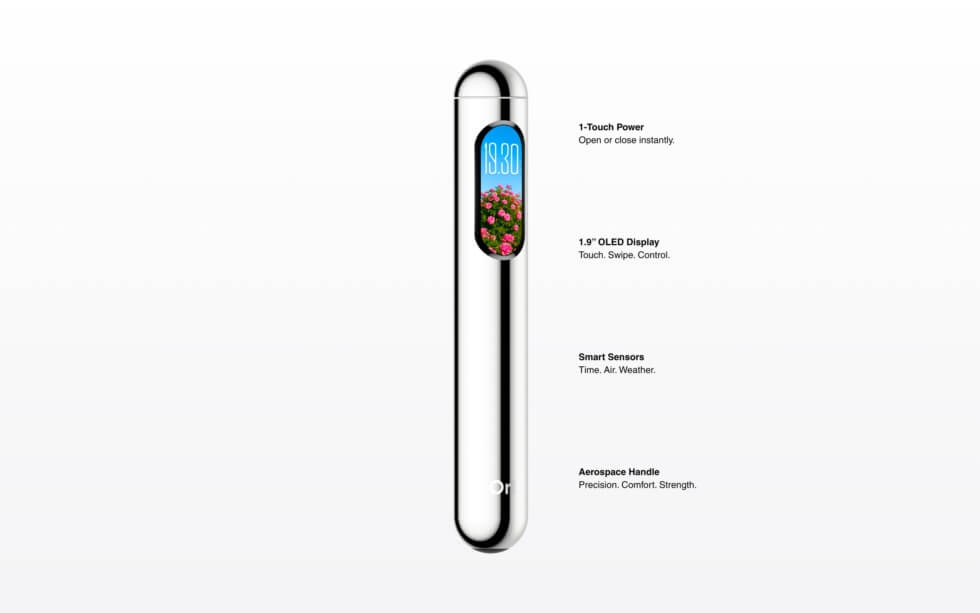






Images courtesy of Ori World