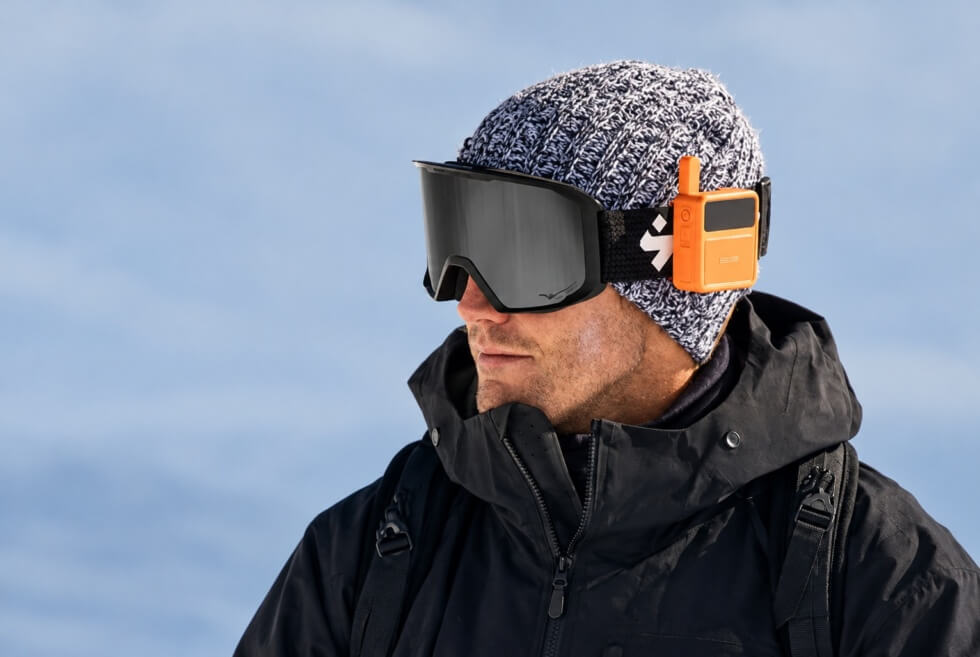
Somewhere between the chairlift and the next trail junction, a quick “where are you?” becomes a glove-off, phone-out exercise. Poclink’s Motion Ultra puts that conversation on your goggle strap instead.
The wearable combines cellular push-to-talk with a separate analog radio. With mobile coverage, the group can talk over LTE. Away from it, nearby teammates can communicate directly, without a cell tower carrying the conversation.
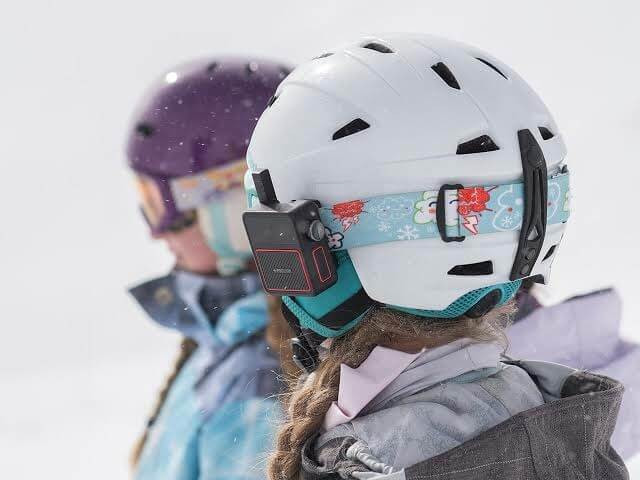
Poclink puts the weight at approximately 100g and shows mounts for goggles, helmets, backpack straps and handlebars. Two large push-to-talk buttons select the connection: one for LTE, the other for analog. That is an important distinction from automatic handover. The manufacturer describes separate controls and simultaneous monitoring, not a promise that every conversation transfers seamlessly between networks.
Two kinds of range, not unlimited reception

LTE is useful when the group spreads out across a resort, or someone heads back to the accommodation. Both ends still need supported cellular coverage. The word “unlimited” describes the distance between connected users, not the ability to find a signal anywhere.
Off-grid operation has much tighter boundaries. In its campaign FAQ, Poclink claims up to 20-plus miles between mountaintops with a clear line of sight, but only 0.5–2 miles in forests or hills. Those are manufacturer estimates, not distances we have measured. A ridge between two riders can matter more than the distance on a map.
It is also not a substitute for a satellite messenger such as ZOLEO. Motion Ultra’s SOS feature is described as sending an alert and location to group members. Do not read that as a satellite link to a staffed rescue service, or assume every connected feature remains available without LTE.
Poclink lists IP67 protection, a 2,000mAh battery and USB-C charging. It calls the endurance “all-day,” which leaves the practical runtime dependent on use rather than providing a fixed talk-time figure. The app adds teammate locations and geofence alerts.
The service plan matters as much as the radio
Poclink promises lifetime access to an included Standard Global Plan without a monthly subscription, with a paid upgrade for wider coverage. However, its own pages give different country totals. Check that your destinations are included rather than treating “global” as a guarantee.
That promise also depends on Poclink continuing to provide the service. Owning the hardware is not the same as owning the mobile networks it uses.
The analog version needs checking too. Poclink describes regional radio configurations, and GMRS operation in the United States requires an FCC license. A radio sold for another country’s frequencies is not automatically suitable for a U.S. trip.
The company advertised a $399 two-pack for launch. That is an announced offer, not a guarantee that the same Kickstarter tier remains available. The separate $10 reservation page is a deposit, not the price of a radio. Check the live reward for its contents, delivery estimate and shipping charges before pledging; crowdfunding delivery is not guaranteed.
The appeal is easy to understand: fewer stops to dig out a phone, with a local radio option when the group leaves cell coverage. The test will be how well it handles wind, terrain and a full day outside. Those answers need field testing, not a longer range claim.
See Poclink Motion on Kickstarter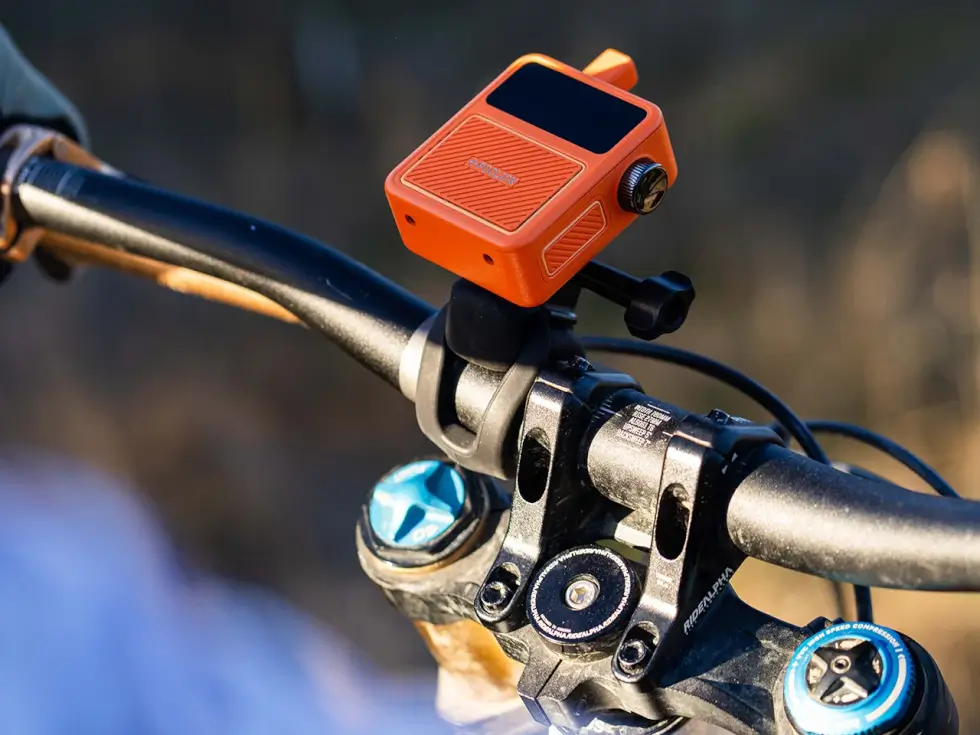
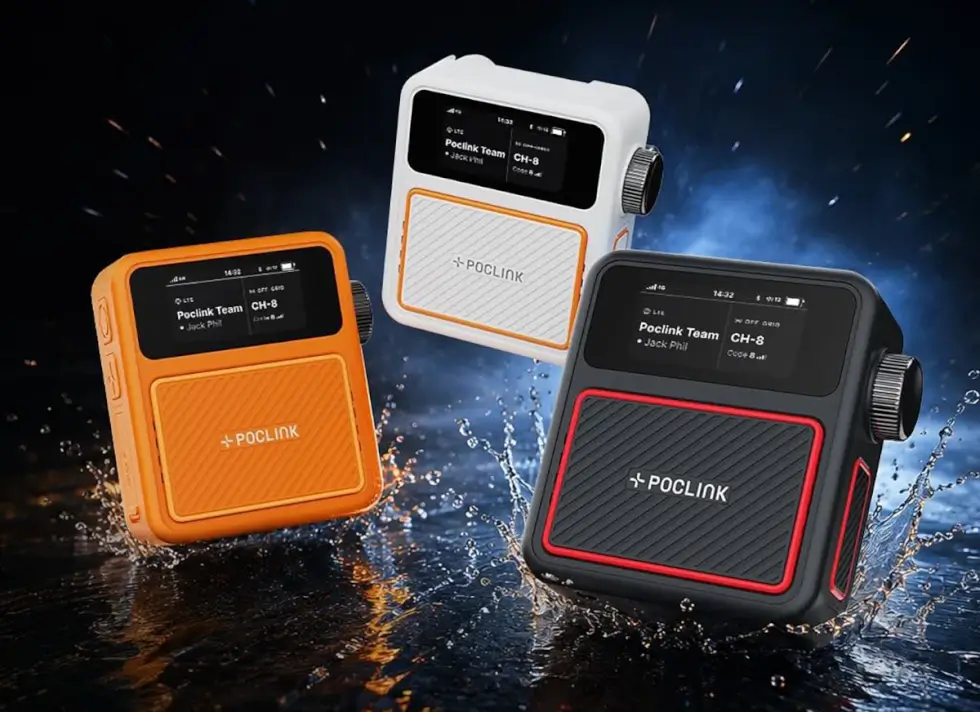
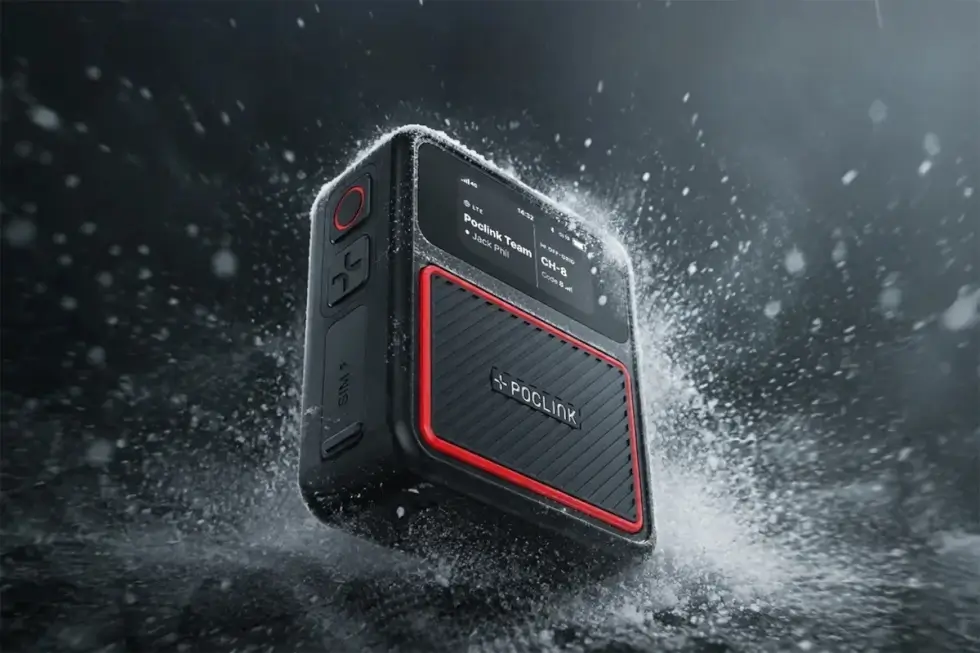
Images courtesy of Poclink.